
On the afternoon of July 28, 2026, the Special training on the newly revised "Trademark Law of the People's Republic of China" on "Knowing the Law, Protecting Enterprises, and Focusing on Development" was successfully held at the Party and Mass Service Center of the Beijing Central Business District (CBD). This event was guided by the Chaoyang District Market Supervision Administration and the Beijing Central Business District Management Committee, and supported by the Chaoyang District Federation of Industry and Commerce. Nearly 50 people attended the event. Wu Junji, partner of Jingsh Law Firm, secretary of the Youth League Committee, and deputy director of the Intellectual Property Committee of Jingsh Law Firm (National), served as the keynote speaker, focusing on the core content of the first comprehensive revision of the Trademark Law in more than 40 years since its implementation in 1983, and bringing systematic and practical professional sharing to participating corporate legal directors, brand managers and intellectual property practitioners.
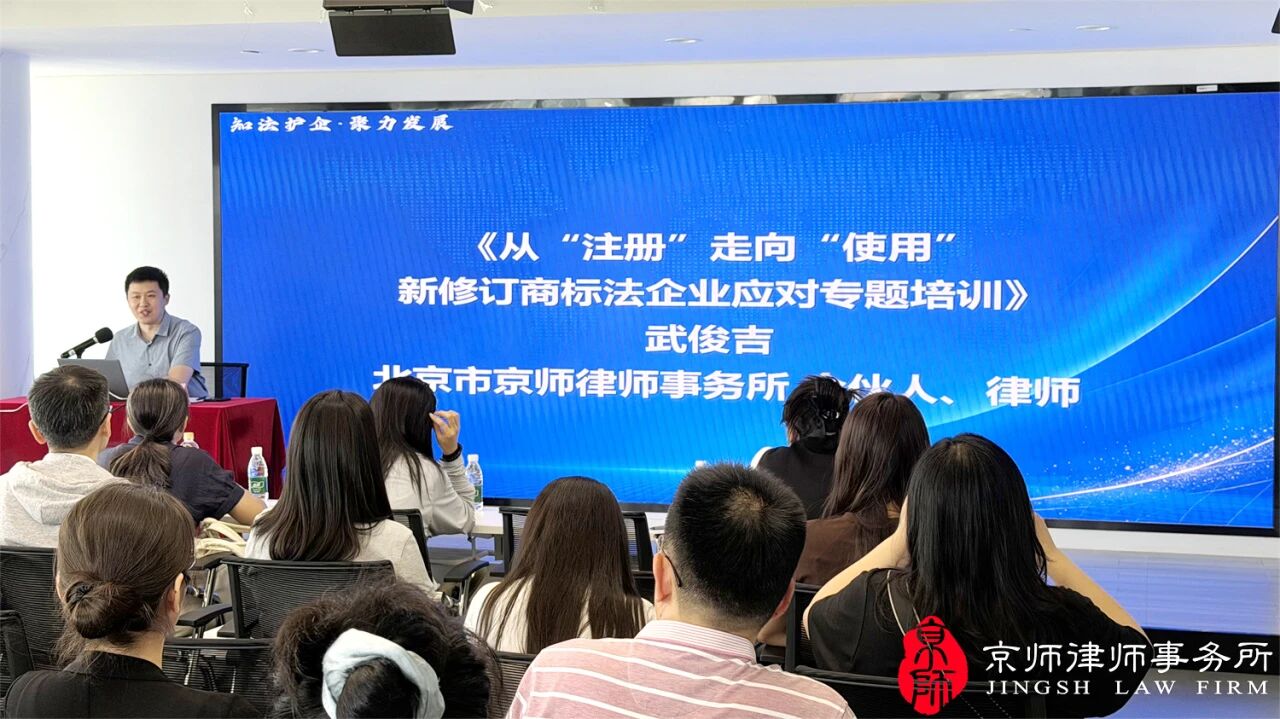
▲Training site
On June 26, 2026, the 23rd Session of the Standing Committee of the 14th National People's Congress voted to adopt the newly revised Trademark Law of the People's Republic of China, which will be officially implemented on January 1, 2027. This revision is the first comprehensive "overhaul" of the Trademark Law in more than 40 years since its implementation in 1983. It systematically reshapes registration conditions, authorization and confirmation procedures, rights protection, use management and legal responsibilities, and puts forward new requirements for corporate trademark layout, brand management and rights protection.
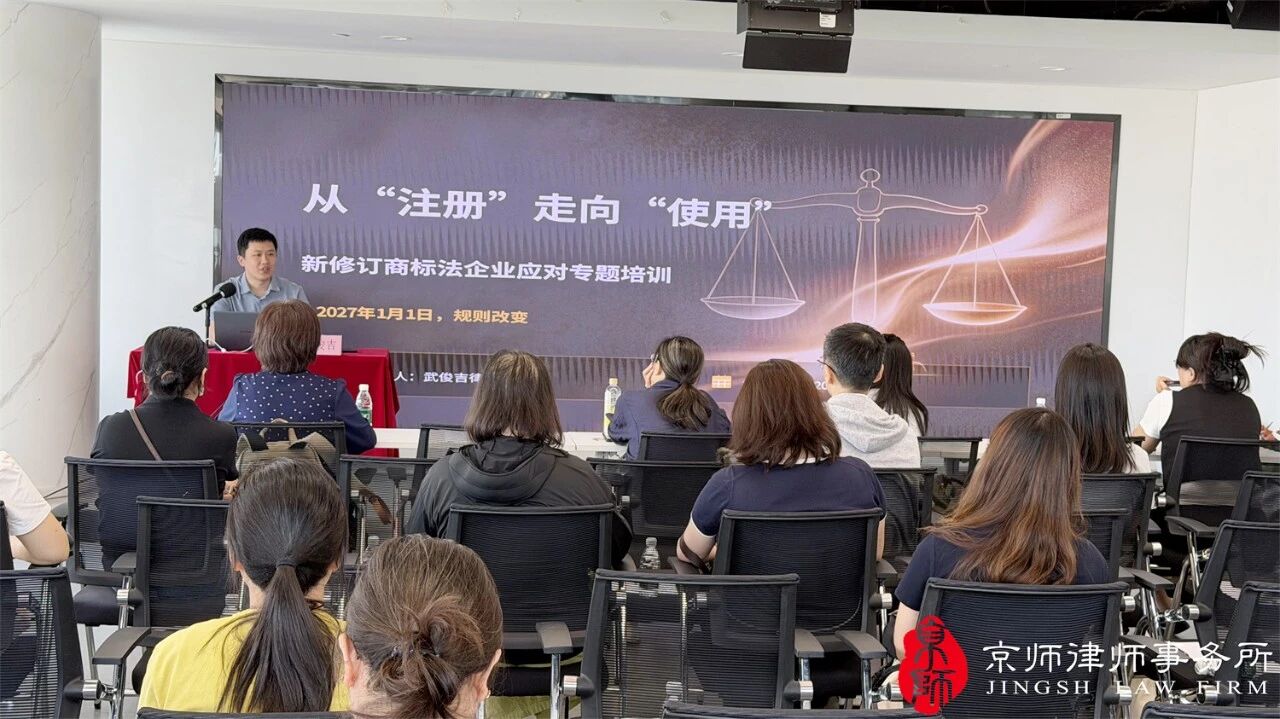
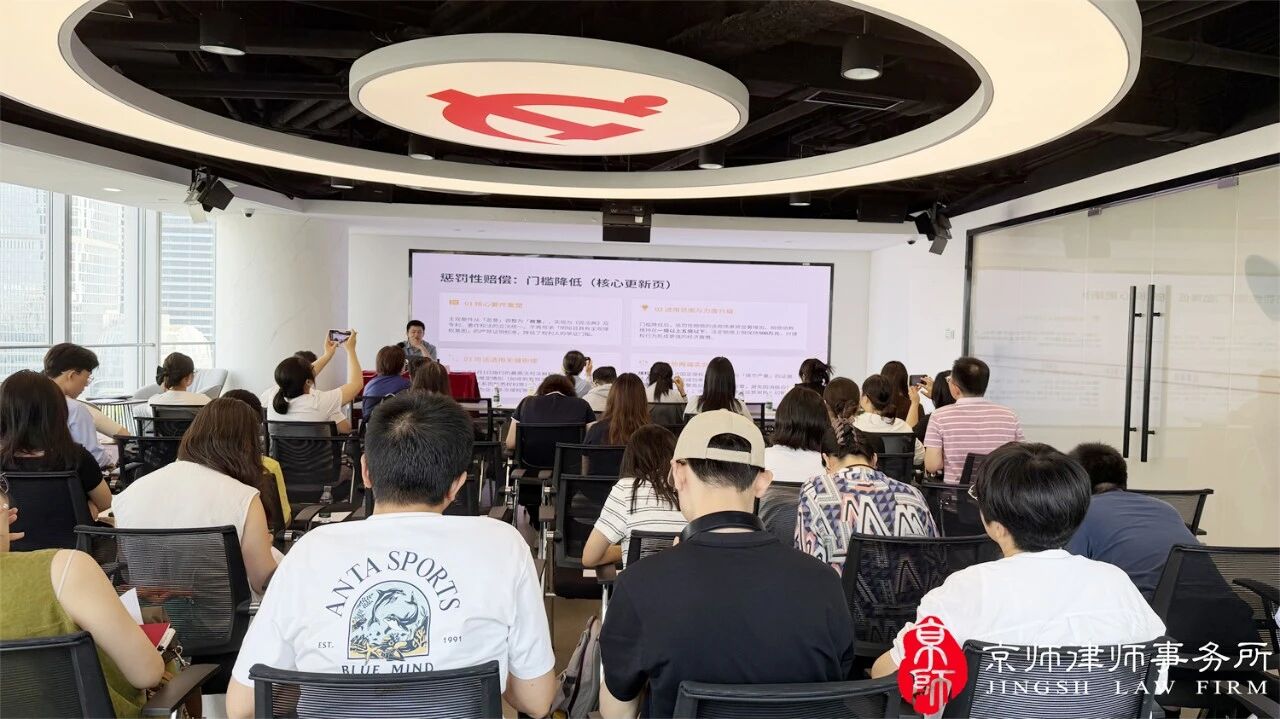
▲Training site
During the training, lawyer Wu Junji gave a detailed explanation around the four major sectors that companies are most concerned about. On the registration side, the new law adds a special chapter on "Conditions for Trademark Registration", which clearly stipulates that applications that are "not for use and clearly exceed normal production and operation needs" will not be registered. At the same time, dynamic marks are included in the registrable objects, and the opposition period is shortened from 3 months to 2 months, which puts forward higher requirements for companies' application strategies and monitoring frequency. On the usage side, the new law defines the essential attributes of trademarks at the legal level for the first time, and brings usage behavior in the Internet environment into the scope of adjustment, systematically regulates misleading usage behaviors such as "scheming trademarks", and builds a progressive punishment system of "ordering corrections - graded fines - cancellation of trademarks". On the rights protection side, the new law expands the scope of cross-class protection of well-known trademarks, adjusts the subjective requirements for punitive damages from "malice" to "intentional", making it easier for rights holders to provide evidence, and also adds countermeasures to malicious lawsuits to balance rights protection and prevent rights abuse. On the overseas side, the new law clarifies that the State Intellectual Property Office can issue official confirmation documents of trademark well-knownness at the request of enterprises, providing strong institutional support for Chinese enterprises to safeguard their overseas rights.
Lawyer Wu Junji pointed out that the underlying logic of the new law is to return to the essence of "source identification" of trademarks and shift the focus of protection from formal confirmation of rights in the registration book to the accumulation of goodwill in real operations. There are still about five months until the new law is officially implemented. This transition period is by no means a waiting period, but a critical window for companies to take inventory of trademark assets, reconstruct usage compliance, upgrade monitoring systems, standardize licensing contracts, lay out new trademarks, and prepare for dual-track overseas expansion. He suggested that different types of enterprises should advance compliance work by priority according to the characteristics of their own business formats, and truly integrate trademark strategies into the entire chain of brand building and market competition.
Representatives from participating companies unanimously stated that this training was informative and had vivid cases. It not only provided an in-depth analysis of the original intention of the legislation, but also provided precise guidance on practical operations, providing a clear path for companies to smoothly transition to the implementation of the new law. In the context of accelerating the construction of a unified national market and the continued strengthening of intellectual property protection, the implementation of the new Trademark Law will further optimize the innovation environment and business environment, encourage market entities to cultivate brand value through genuine use, and win market recognition through honest operations.
The successful holding of this training reflects the active role of Jingsh Lawyers in serving the real economy and safeguarding brand development. In the future, Jingsh Law Firm will give full play to its professional advantages in the fields of trademarks, anti-unfair competition and comprehensive protection of intellectual property rights, help enterprises build a strong brand moat under the framework of the new law, empower the high-quality development of the real economy with high-quality legal services, and contribute professional strength to the construction of a strong country with intellectual property rights.