
In order to deepen the all-weather strategic partnership between China and Cambodia in the new era and help domestic enterprises seize investment opportunities in Cambodia’s cultural tourism and industrial parks, the Cambodia Industrial Investment Cooperation Business Exchange Forum was successfully held on July 27 at Beijing Tianzhu Black Knight Golf Club. Song Jiawei, Ambassador of Cambodia to China, Qin Jinjin, Director of the Hohhot Branch of Jingsh Law Firm and Director of the Cambodia and Mongolia Cooperation Office of Jingsh Law Firm, as well as heads of many large Chinese enterprises and professional institutions from the fields of strategic planning, industrial real estate, construction engineering, tourism investment, agricultural science and technology, etc. attended this meeting. All parties participating in the meeting conducted in-depth discussions on core topics such as industrial investment opportunities, corporate market entry strategies, project inspection and docking, and long-term cooperation mechanisms.
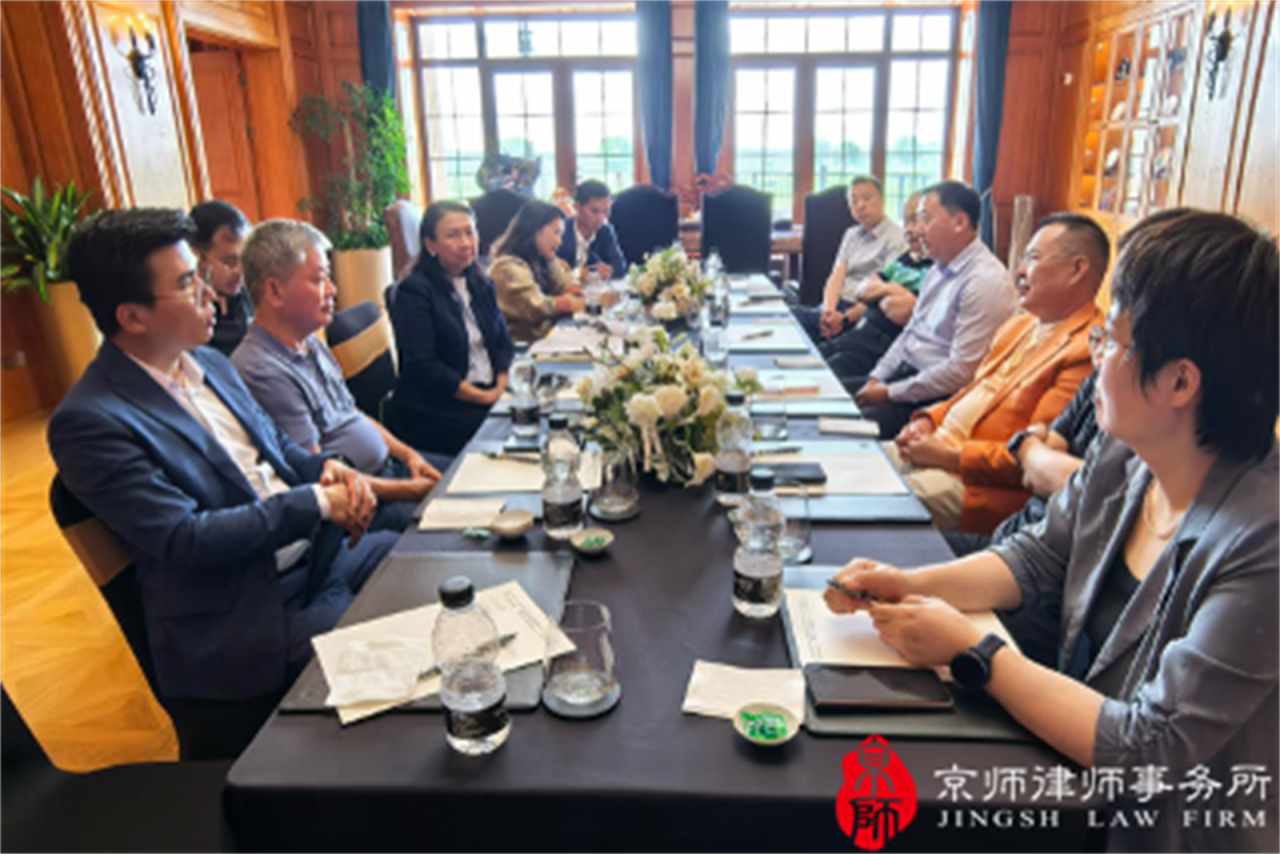
▲Conference site
At the meeting, Cambodian Ambassador to China Song Jiawei gave a systematic introduction to Cambodia’s economic and social development status, industrial construction foundation and future investment needs, so that participating companies can further understand Cambodia’s development direction, market conditions and cooperation space.
This exchange event was rich in content and agenda, and the entire atmosphere was rigorous, pragmatic, efficient and in-depth. At the meeting, Cambodian representatives systematically introduced Cambodia’s current opening up pattern, key industry support policies, foreign investment business environment and future investment directions, and conducted multi-angle, in-depth and in-depth discussions around important issues such as the in-depth development of China-Cambodia cultural tourism, the construction of cross-border industrial parks, and the establishment of a normalized bilateral cooperation mechanism.
During the discussion session, the participants conducted professional exchanges on Cambodia’s core investment tracks, focusing on the upgrading of Angkor Wat’s cultural tourism in Siem Reap, the creation of new cultural tourism formats, the linkage of cross-border tourist sources, the construction of foreign-related compliance operation systems, as well as the overall planning of the Svay Rieng Special Economic Zone, investment promotion layout, infrastructure supporting facilities, market-oriented operation models and other fields. They fully exchanged ideas, shared industry experience, and jointly discussed implementation paths. All parties agreed to continue to build normal communication channels and establish a long-term cooperation mechanism for policy exchanges, project promotion, on-site inspections, and resource docking.
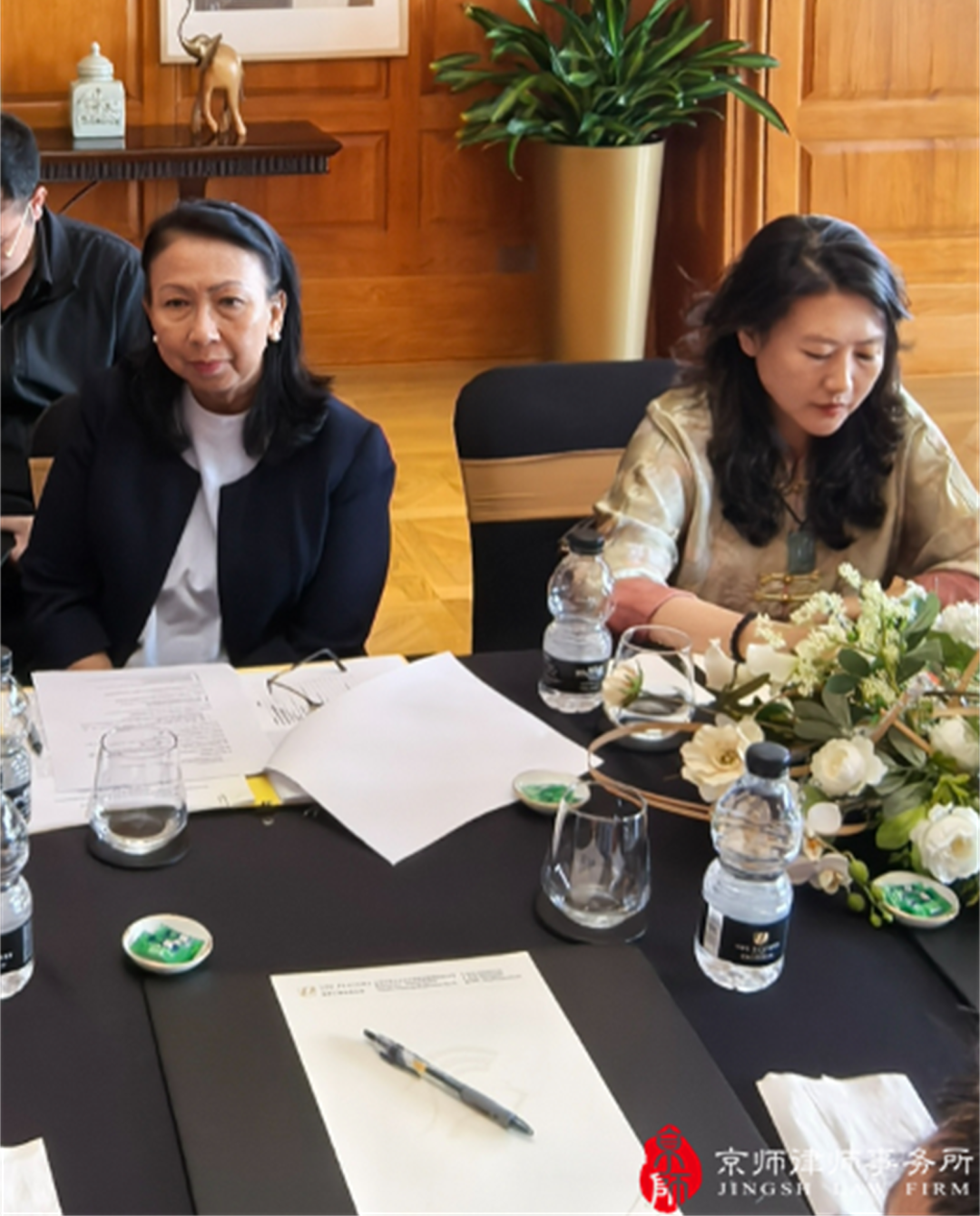
Left: Cambodian Ambassador to China Song Jiawei
Right: Qin Jinjin, Director of Jingsh Hohhot Branch and Director of Jingsh Law Firm’s Cambodia and Mongolia Cooperation Office
Based on the current new situation of China-Cambodia economic and trade cooperation, representatives from all parties systematically sorted out the legal concerns of Chinese enterprises investing in Cambodia, covering key areas such as foreign investment access rules, compliance with land use, park cooperation models, cross-border investment and financing regulations, foreign-related labor and employment, and cross-border dispute resolution. The guests at the meeting generally believed that the current cooperation between China and Cambodia in jointly building the "Belt and Road" continues to deepen. Cambodia has significant advantages in opening up in fields such as culture and tourism, modern agriculture, and advanced manufacturing. There is broad space for enterprises to expand overseas. At the same time, more attention must be paid to cross-border compliance construction and risk prevention and control, and professional foreign-related legal services should be used to escort the steady implementation of projects.
This symposium not only reached a number of consensuses, but also established a normal communication mechanism for all parties participating in the meeting, and set up special docking channels around business and project docking, tourism investment cooperation, daily affairs coordination, etc., achieving an important transformation from phased communication to institutionalized collaboration. The establishment of this mechanism will further unblock the information channels between Cambodia’s investment needs and the industrial capabilities of Chinese enterprises, and provide stable support for subsequent policy communication, project promotion, enterprise inspections and resource coordination. Looking forward to the future, Jingsh Law Firm will continue to take professional legal services as the cornerstone and rely on its international network advantages to continue to empower Chinese companies to deeply participate in the construction of the Cambodian and Southeast Asian markets, help China-Cambodia economic and trade cooperation move to a higher level and wider areas, and inject new impetus into the comprehensive strategic partnership between the two countries.