With the deepening of economic globalization, official crimes, especially corruption crimes such as corruption and bribery, have increasingly taken on transnational characteristics. Cross-border transfers of corrupt assets and the flight of corrupt elements have occurred frequently, posing serious challenges to the dignity of the rule of law, social equity and economic order in various countries. In April this year, the Central Anti-Corruption Coordination Group’s International Fugitive and Asset Recovery and Cross-border Corruption Governance Office held a meeting to study and implement the spirit of the Fifth Plenary Session of the 20th Central Commission for Discipline Inspection, study and deploy anti-corruption international fugitive and asset recovery and cross-border corruption governance in 2026, and launch the "Skynet 2026" operation.
In this context, in order to implement the overall deployment of the Party Central Committee on anti-corruption and international fugitive and asset recovery work and the spirit of the Fifth Plenary Session of the 20th Central Commission for Discipline Inspection, and promote the transformation of the theoretical research results of the Group of Twenty (G20) on anti-corruption and asset recovery, on May 19, 2026, Jingshi Law Firm The Academic Symposium on Crime Governance and Anti-corruption and Fugitive Recovery was officially held at the Jingshi Lawyers Building. It focused on the difficult legal issues of foreign-related corruption governance and international fugitive recovery, explored cooperation paths in different legal jurisdictions, served the overall situation of national anti-corruption work, and contributed to strengthening my country’s international anti-corruption system and capabilities.
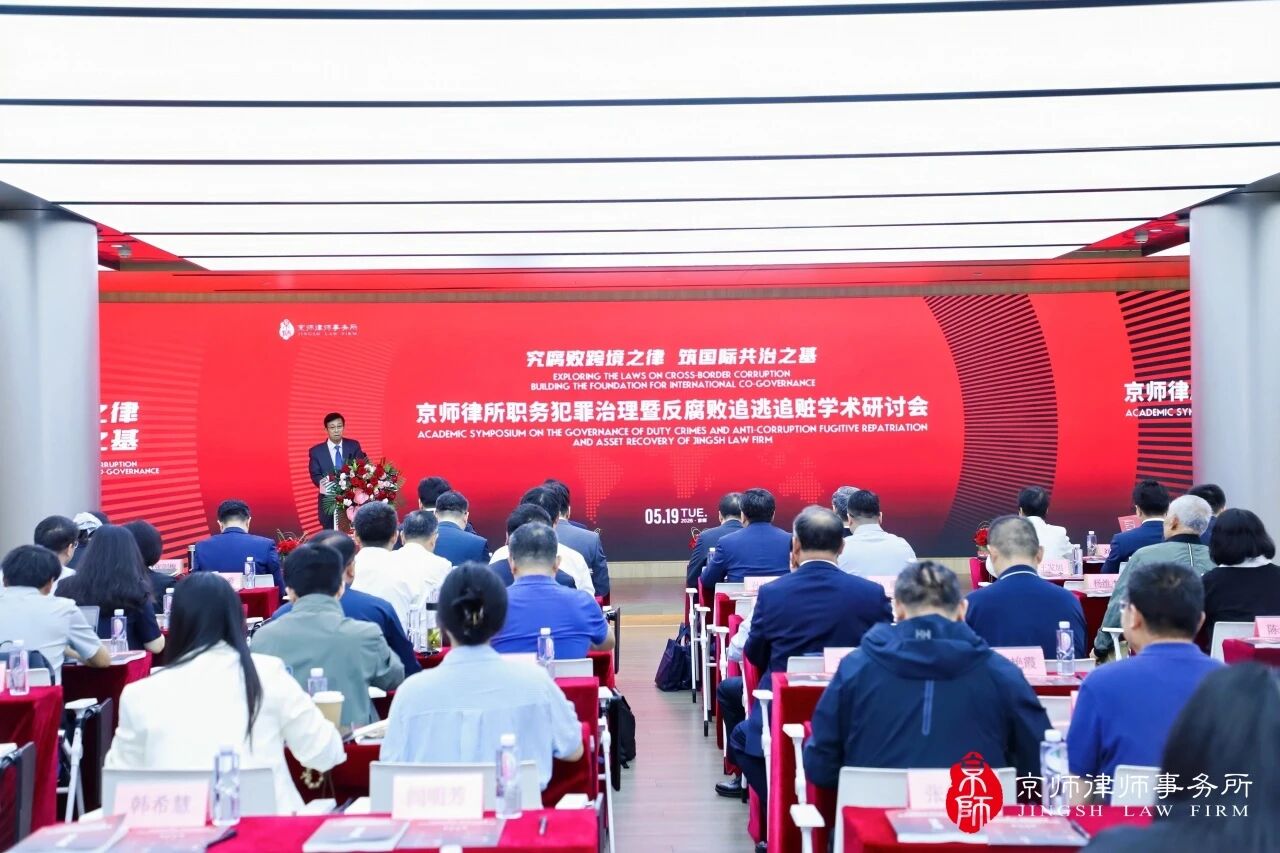
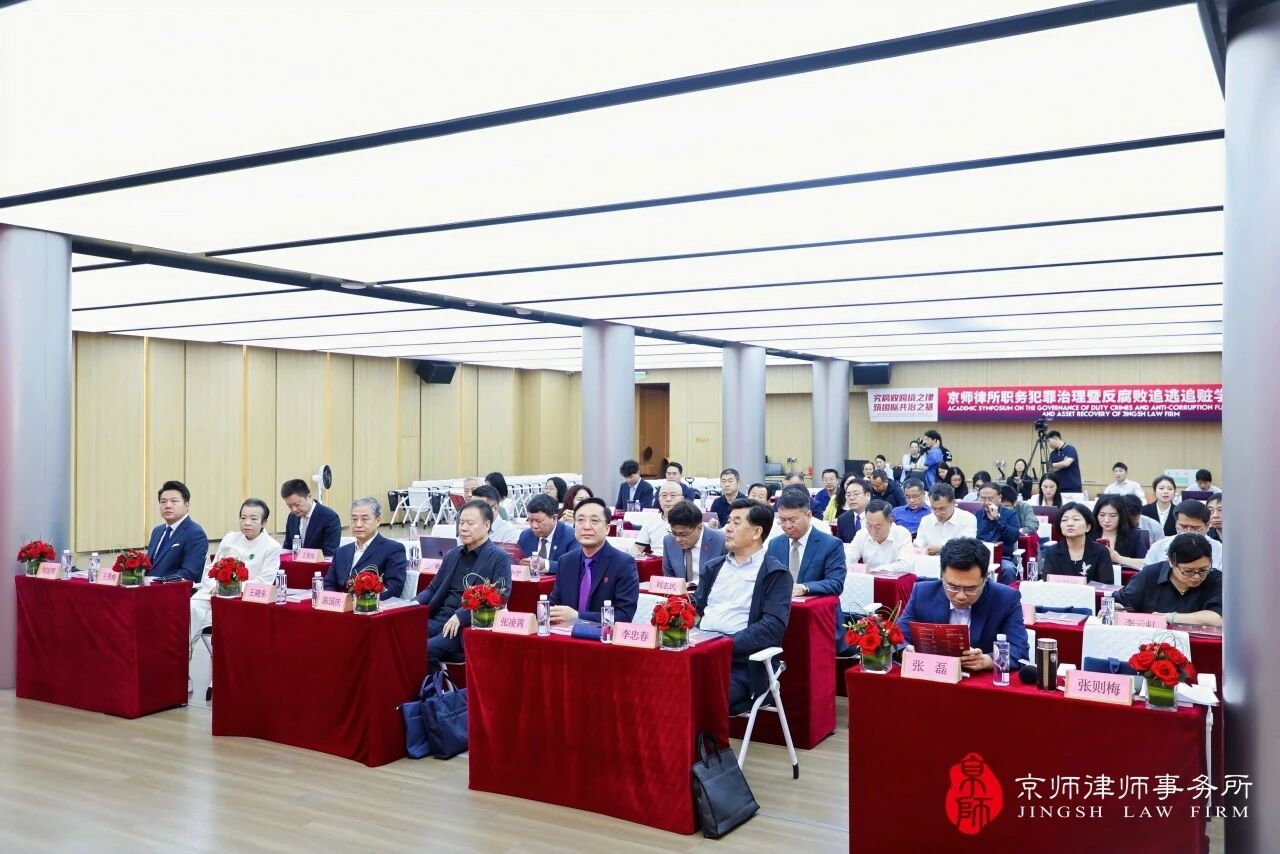
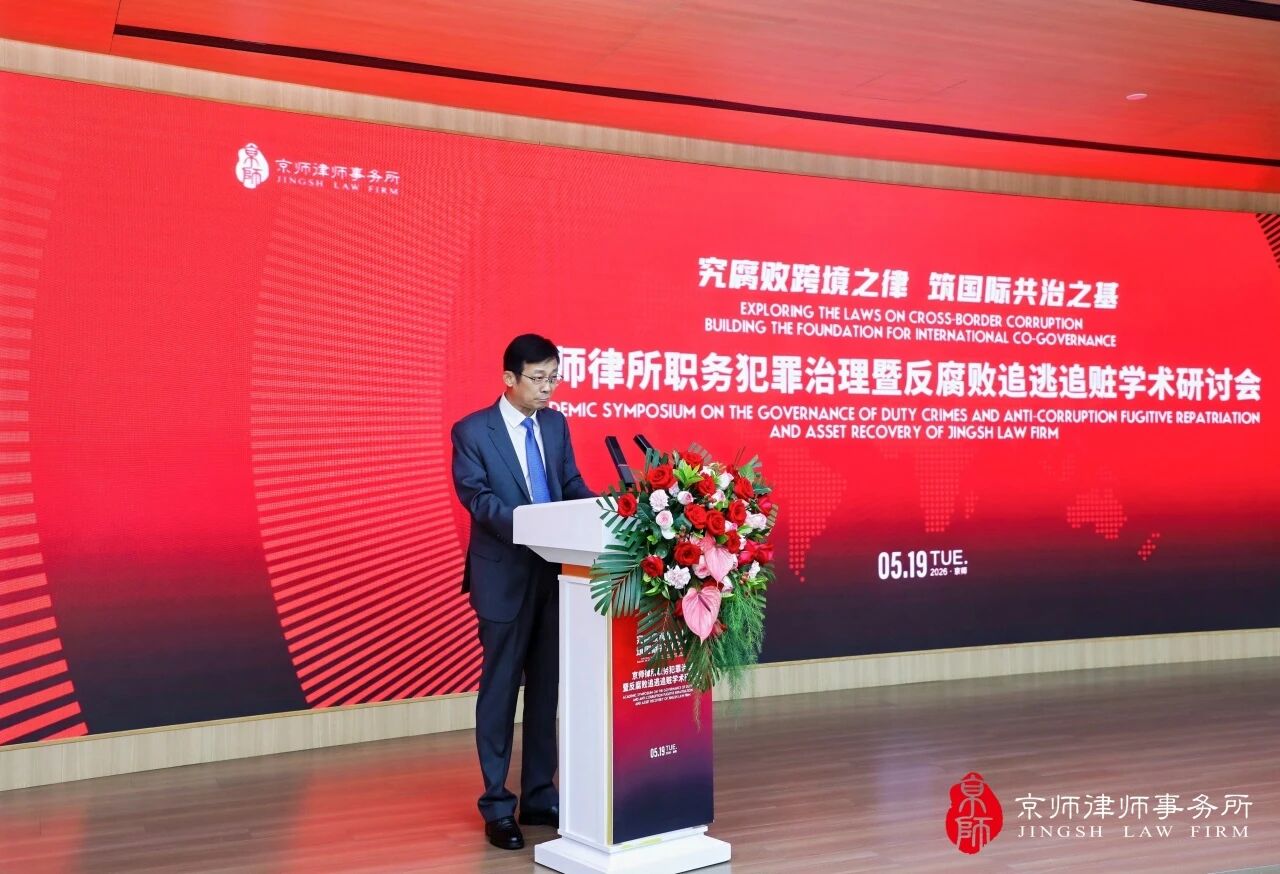
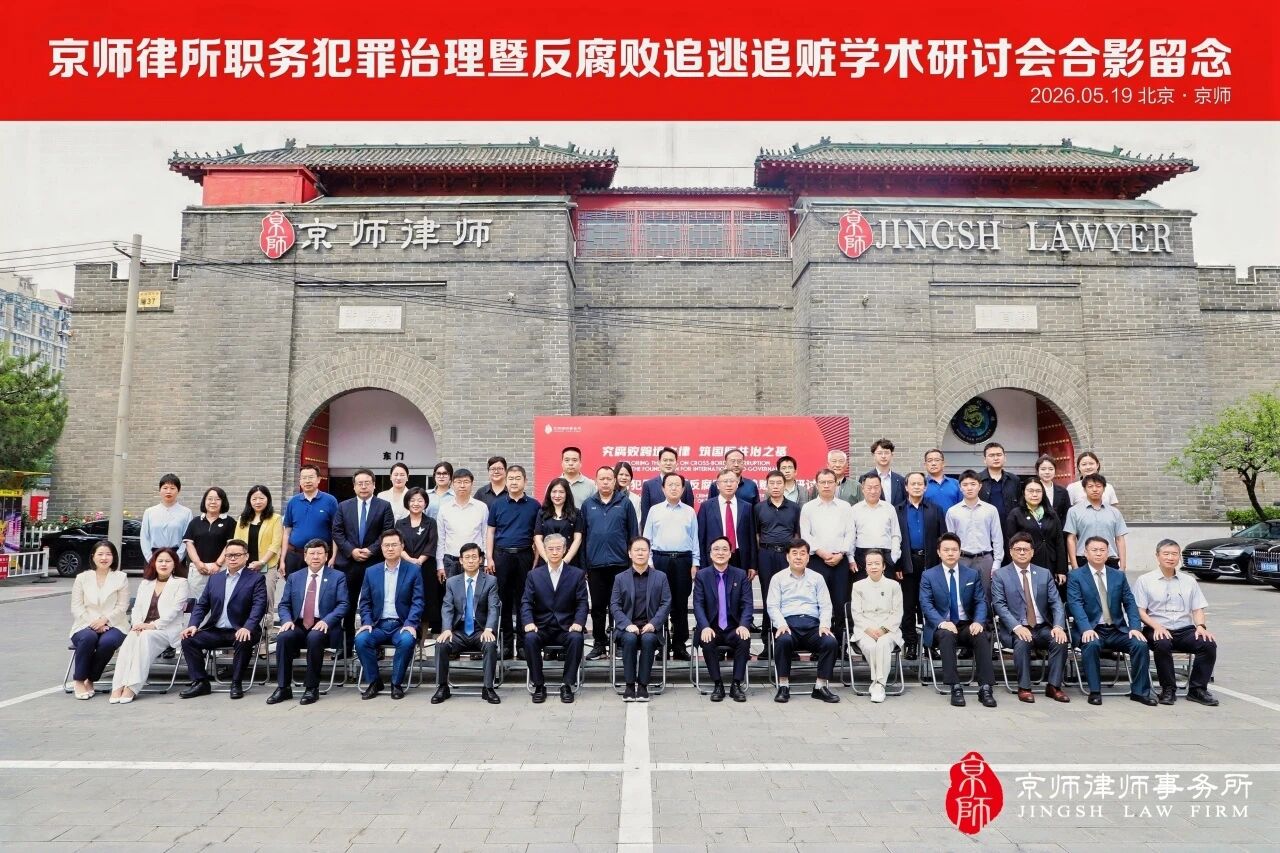
▲Conference site
Guests Former Deputy Prosecutor General of the Supreme People's Procuratorate, current member of the National Committee of the Chinese People's Political Consultative Conference, second-level prosecutor of the Supreme People's Procuratorate, and vice president of the Procuratorial Research Society of the China Law SocietyChen Guoqing Currently Deputy Director of the Advisory Committee of the Supreme People's Court, President of the Network and Information Law Research Association of the China Law Society, Doctor of Laws Jiang Wei Former President of the Second Criminal Tribunal of the Supreme People's Court, first-class senior judge, Doctor of Laws, currently Director of the Academic Committee of the Group of Twenty (G20) Anti-Corruption and Fugitive Recovery Research Center, Vice President of the Chinese Society of Criminology, Vice President of the China Criminal Procedure Law Research Association, and part-time professor at Jilin University and China University of Political Science and Law**Wang Xiaodong First-level inspector of the Propaganda Department of the All-China Federation of Industry and Commerce, former director of the Jilin Branch of the People's Daily, deputy secretary of the Party Committee of the Reporter Department of the People's Daily,and editor-in-chief of the China Business Times Li Zhongchun
Professor and doctoral supervisor at the Institute of Criminal Legal Sciences and Law School of Beijing Normal University, Director of the G20 Anti-Corruption and Fugitive Recovery Research Center, Head of the Occupational Crime Research Base of the Supreme People’s Court, Vice Chairm an of the International Association of Criminal Law Wang Xiumei
Zhang Lei, Professor of Law School of Beijing Normal UniversitySecretary of the Party Committee and Director of Jingshi Law Firm Zhang Lingxiao** Deputy Director of Jingshi Law Firm ManagementCommittee and Director of Cultural Brand Committee Liu Honghui sponsor:Equity partner of Jingsh Law Firm, researcher of Beijing Supervisory Law Research Association, deputy director and secretary-general of the Professional Crime Management Committee of Beijing Supervisory Law Research Association Zhang Zemei Equity Partner of Jingsh Law Firm, Honorary Director of the Criminal Committee of Jingsh Law Firm (National), Researcher of Beijing Supervisory Law Research Association Liu Zhimin Deputy Secretary of the Party Committee, Deputy Executive Director of Jingsh Law Firm, Honorary Director of the Criminal Committee of Jingsh Law Firm (National)Zheng Xiaoning
Wang Dianxue, equity partner of Jingsh Law Firm and director of the Criminal Committee of Jingsh Law Firm (National) (unable to attend due to business reasons)
Lan He, equity partner of Jingsh Law Firm and deputy director of the Criminal Committee of Jingsh Law Firm (National)
Mao Wei, Partner of Jingsh Law Firm, Director of the Capital Market Legal Affairs Department of Jingsh Law Firm, and Researcher of Beijing Supervisory Law Research Association
Thesis report and theme sharing on-site speaker: Equity Partner of Jingsh Law Firm, Honorary Director of the Criminal Committee of Jingsh Law Firm (National), Director of the Professional Crime Management Committee of the Beijing Supervisory Law Research AssociationWang Faxu Li Zhiguang, senior partner of Beijing Jingdu Law Firm, secretary-general of the Enterprise-related Crime Defense and Prevention and Control Research Center, and deputy director of the Professional Crime Management Committee of Beiji ng Supervisory Law Research Association
Bai Feiyun, Equity Partner of Jingsh Law Firm and Chairman of the Women’s Federation
Jing Haijing, partner of Beijing Zhongwen Law Firm and deputy secretary-general of the Company Law Committee of the Beijing Lawyers Association
Huo Weidi, senior partner of Jingsh Law Firm Shanghai Branch and director of the Digital Economic Crime Research Center of the Criminal Committee of Jingsh Law Firm (National)
More than 80 people including colleagues from the legal profession inside and outside the firm attended the meeting.
The meeting was chaired by Zhang Zemei, equity partner of Jingsh Law Firm, researcher of the Beijing Supervisory Law Research Association, and deputy director and secretary-general of the Professional Crime Management Committee of the Beijing Supervisory Law Research Association.
Welcome Speech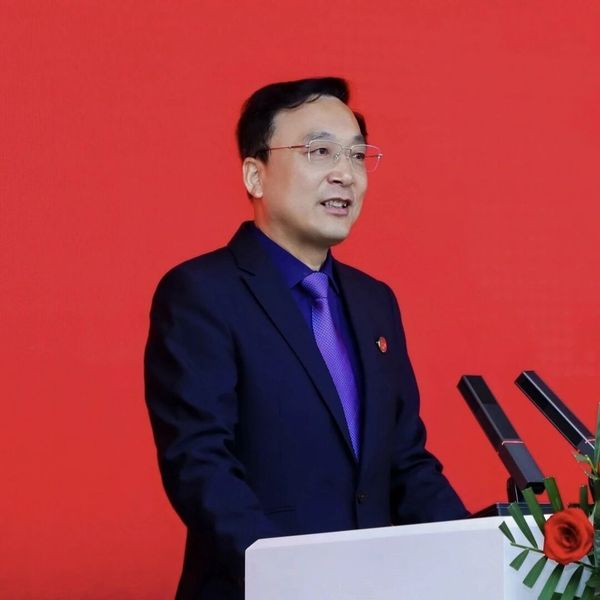 Zhang Lingxiao
Party Committee Secretary and Director of Jingshi Law Firm
Zhang Lingxiao, Secretary of the Party Committee and Director of Jingshi Law Firm, delivered a welcome speech for the seminar. He pointed out that anti-corruption, fugitive pursuit and illicit recovery is a common problem faced by the international community. To this end, my country has established a central fugitive pursuit office, promoted the establishment of the G20 Anti-corruption Fugitive and Asset Recovery Research Center, and improved systems such as confiscation of illegal income and trial in absentia, and has achieved remarkable results. Then, he started from the "should do" of law firms in the grand narrative, pointing out that Jingsh Law Firm hopes to build a platform for theoretical research "navigation chart" and front-line practical "off-road vehicle" to run in parallel, and emphasized Jingsh Law Firm's three major advantages: extensive network coverage, long-term information network and collaborative tentacles; comprehensive talent echelon qualifications, efficient response to complex practical problems; rich case library, sufficient accumulation of practical case handling materials. He said that pursuing fugitives and recovering stolen goods and tackling cross-border corruption are important components of comprehensive and strict governance of the party in the new era, and are also necessary to resolutely win the protracted war against corruption. We hope to use this seminar as an opportunity to build a bridge connecting theory and practice, academia and the front line, and contribute professional strength to a nti-corruption and fugitive recovery.
Guest Speech Chen Guoqing
Former Deputy Prosecutor General of the Supreme People's Procuratorate
Current member of the National Committee of the Chinese People's Political Consultative Conference
Second-level prosecutor of the Supreme People's Procuratorate
Vice President of Procuratorial Research Society of China Law Society
Chen Guoqing, the former deputy prosecutor of the Supreme People's Procuratorate, currently a member of the National Committee of the Chinese People's Political Consultative Conference, a second-level prosecutor of the Supreme People's Procuratorate, and vice president of the Procuratorial Research Society of the China Law Society, said that the current bribery crime has shown new characteristics, and the two high offices have issued the "Interpretation of Several Issues Concerning the Application of Laws in Handling Criminal Cases of Corruption and Bribery (II)", adhering to strict punishment in accordance with the law, systematic governance and problem orientation, and standardizing key issues such as the differentiation of bribery crimes and the acceptance of bribes based on expected returns. He emphasized that the interpretation clarified that crimes such as bribery, job embezzlement, and misappropriation of funds by non-state employees should be sentenced according to the standards for corresponding crimes for public officials, and that the same crime should be punished equally and all types of ownership of the economy should be equally protected in accordance with the law. At the same time, the explanation is to make strict identification of new types of hidden corruption such as stocks, equity, and expected returns, improve illegal income and income recovery rules, and follow the principle of recovery of the original thing. In addition, he said that the topic selection of this conference is pragmatic and far-reaching, and he hopes to use this discussion to build consensus, unify the standards of legal application, strengthen the management of occupational crimes and anti-corruption and fugitive recovery, and help optimize and upgrade the construction of a legal business environment.
Jiang Wei
Currently Deputy Director of the Advisory Committee of the Supreme People's Court
President of the Network and Information Law Research Association of China Law Society, Doctor of Laws
Jiang Wei, currently deputy director of the Advisory Committee of the Supreme People's Court, president of the Network and Information Law Research Society of the China Law Society, and a doctor of law, extended warm congratulations on the convening of this seminar in a video speech. He pointed out that it is very necessary and significant for Jingshi Law Firm to host an academic seminar on the management of occupational crimes and anti-corruption and fugitive recovery to provide suggestions and suggestions for the country's anti-corruption work. He pointed out that, first of all, the current pursuit of fugitives and stolen goods faces multiple challenges: in foreign-related economic crime cases, issues such as extraterritorial jurisdiction, cross-border investigation and evidence collection, extradition rules, and the connection of domestic criminal proceedings are prominent. Differences in the judicial systems of various countries constitute fundamental obstacles. Some countries that are the main destinations of escapes have not established an institutional cooperation framework. Overseas recovery of stolen goods faces practical difficulties, and it is necessary to build a long-term mechanism with systematic thinking. Second, we must coordinate the promotion of domestic rule of law, foreign-related rule of law, and international rule of law: improve the domestic legal system, speed up the formulation of anti-cross-border corruption laws, strengthen the connection of domestic and foreign rules, use extradition alternatives, promote bilateral and multilateral law enforcement and judicial cooperation, and actively participate in the formulation of international rules. Third, we must give full play to the important role of lawyers in pursuing fugitives and recovering stolen property. Lawyers can demonstrate the legitimacy and fairness of our country's procedures, respond to overseas doubts, and create a good legal environment for international cooperation. He said that anti-corruption cross-border pursuit of fugitives and stolen goods is a long-term systematic project. It is necessary to promote fugitive pursuit, escape prevention, and recovery of stolen goods in an integrated manner, and build a strict institutional system so that corrupt elements have nowhere to hide and the proceeds of corruption have nowhere to hide.
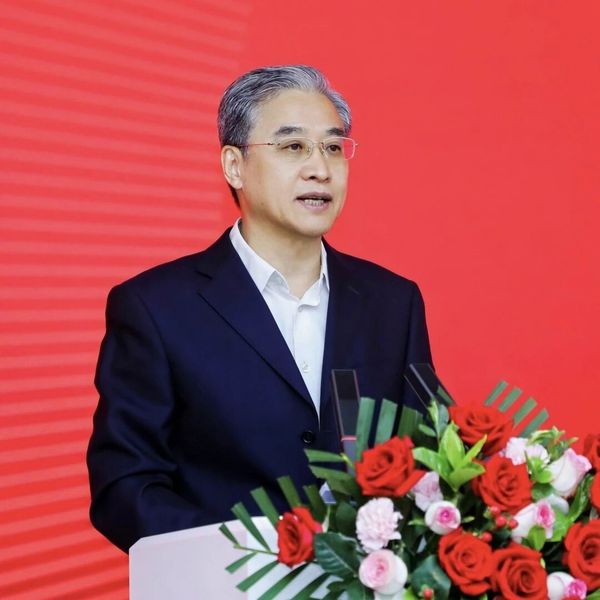
Wang Xiaodong
Former President of the Second Criminal Division of the Supreme People's Court
Senior Judge First Class, Doctor of Laws
Currently, he is the Director of the Academic Committee of the G20 Anti-Corruption and Fugitive Recovery Research Center.
Vice President of Chinese Society of Criminology
Vice President of China Criminal Procedure Law Research Association
Adjunct professor at Jilin University and China University of Political Science and Law
Wang Xiaodong, former president of the Second Criminal Tribunal of the Supreme People's Court, first-level senior judge, doctor of law, currently director of the Academic Committee of the Group of Twenty (G20) Anti-Corruption and Fugitive Recovery Research Center, vice president of the Chinese Society of Criminology, vice president of the China Criminal Procedure Law Research Association, and adjunct professor of Jilin University and China University of Political Science and Law, said that since the 18th National Congress of the Communist Party of China, under the strong leadership of the Party Central Committee, the anti-corruption struggle has achieved overwhelming success This victory was achieved and comprehensively consolidated. It was personally deployed and promoted by General Secretary Xi Jinping. Since the launch of special operations in 2014, my country has used various means such as "Skynet" and "Fox Hunt" to comprehensively use extradition, repatriation, persuasion to return, off-site arrests and other means to recover a large number of fugitives and huge amounts of stolen money. Systems such as confiscation of illegal income and trial in absentia have been implemented and have taken effect, demonstrating the firm determination to pursue those who escape and pursue them to the end. At the same time, he pointed out that the current work of chasing fugitives and recovering stolen goods still faces practical challenges such as external political obstacles, differences in legal systems, and difficulties in asset recovery. There are also internal problems such as insufficient clues, difficulty in collecting evidence, poor coordination between departments, and focusing on chasing fugitives but not on recovering stolen goods. He said that lawyers bear important functions such as professional support, judicial assistance, procedural agency, asset recovery, asset return negotiation, compliance control, rights protection and procedural supervision in cross-border pursuit of fugitives and stolen property, and are an important bridge for cross-border judicial cooperation. Jingshi Law Firm has a solid research platform and professional advantages, and is expected to play a greater role in the management of occupational crimes and anti-corruption in the international pursuit of fugitives and s tolen assets.
Special work background introduction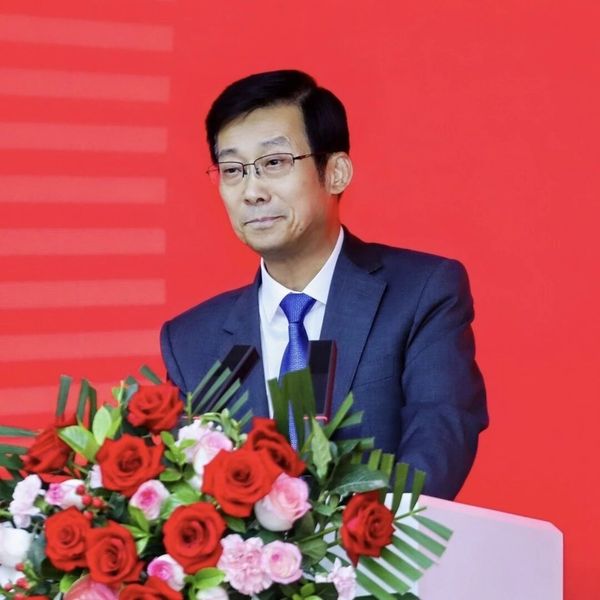 Zhang Zemei
Equity partner of Jingsh Law Firm
Researcher of Beijing Supervisory Law Research Association
Deputy Director and Secretary-General of the Professional Crime Management Committee of the Beijing Supervisory Law Research Association
At the meeting, Zhang Zemei, equity partner of Jingsh Law Firm, researcher of the Beijing Supervisory Law Research Association, and deputy director and secretary-general of the Professional Crime Management Committee of the Beijing Supervisory Law Research Association, introduced the background of the special work. He pointed out that the fight against corruption has entered a new stage of normalization, rule of law and internationalization. The covert, intelligent and cross-border characteristics of official crimes have become increasingly prominent. Issues such as the flight and concealment of corrupt elements and the cross-border transfer of stolen funds have become key and difficult issues in the management of official crimes. He made a key sharing based on the current situation, policy deployment, theoretical practice, international cooperation and lawyers' responsibilities: in-depth benchmarking of the central strategic deployment, anchoring the fundamental direction of official crime management and anti-corruption, fugitive and stolen property recovery; relying on the platform of the G20 Anti-Corruption, Fugitive and Lost Property Recovery Research Center to empower the new era Construction of a governance system for occupational crimes; focusing on the integration of theory and practice in anti-corruption pursuit of fugitives and asset recovery to solve practical problems in the governance of occupational crimes; grasping the cooperation consensus of G20 member states and gathering international joint efforts in cross-border anti-corruption pursuit of fugitives and asset recovery; demonstrating the professional value of Chinese and foreign lawyers and shouldering the legal responsibility of international anti-corruption pursuit of fugitives and asset recovery.
In addition, he pointed out that this academic seminar on occupational crime management and anti-corruption, fugitive and stolen property recovery has profound practical significance: deepening the theoretical research on official crime and fugitive and stolen property recovery, filling academic gaps and building professional consensus; solving the difficulties and pain points in case handling, improving the practical efficiency of handling official crime and cross-border fugitive and stolen property recovery; demonstrating the responsibility of Jingshi Law Firm in researching on the management of job-related crimes, safeguarding the legitimate rights and interests of parties, and serving the construction of national anti-corruption law. Jingsh Law Firm will take this seminar as an opportunity to actively participate in the governance of the source of occupational crimes, corporate anti-corruption prevention and control, and cross-border legal services for fugitive and stolen property recovery, and strive to contribute more to the national anti-corruption work, the construction of a rule-of-law China, and global anti-corruption governance.
Keynote Report** Wang Xiumei
Beijing Normal University Institute of Criminal Law Sciences
Professor and doctoral supervisor of the School of Law
Director of the G20 Anti-Corruption and Fugitive Recovery Research Center
Head of the Occupational Crime Research Base of the Supreme People's Court
Vice President of the International Association of Criminal Law
Wang Xiumei, professor and doctoral supervisor at the Institute of Criminal Legal Sciences and Law School of Beijing Normal University, director of the Group of Twenty (G20) Anti-Corruption, Fugitive and Asset Recovery Research Center, head of the Occupational Crime Research Base of the Supreme People's Court, and Vice Chairman of the International Association of Criminal Law, gave a keynote report on "The Logic and Mechanism of Integrated Governance of Anti-Corruption, Fugitive and Asset Recovery". She pointed out that my country has achieved remarkable results in the pursuit of fugitives and recovered stolen goods, but it still faces practical problems such as insufficient extradition treaties, overseas judicial obstacles, extradition difficulties, and difficulties in asset return and sharing. It is necessary to build an integrated governance system that treats both the symptoms and root causes and prevents and controls the source. She elaborated on the three levels of self-discipline, governance, and the construction of a fugitive and illicit recovery system, emphasizing that self-cultivation and self-discipline should be used to achieve "not wanting to corrupt", and institutional governance should be used to achieve "cannot corrupt, dare not corrupt", improve the supervision and criminal legal system, and accurately respond to new types of corruption and hidden corruption. In response to cross-border pursuits, she proposed using alternative measures to extradition, illegal income confiscation procedures, absentee trials and other systems to solve practical problems, strengthen cross-border capital flow supervision and anti-money laundering cooperation, and shift from passive pursuit to proactive prevention. At the same time, international cooperation should be strengthened, cross-border anti-corruption legislation and multi-department coordination should be accelerated, the important role of lawyers should be given full play, and the construction of a high-quality foreign-related legal talent team should be accelerated to facilitate the steady development of anti-corruption pursuits, escape prevention, and recovery of stolen goods.
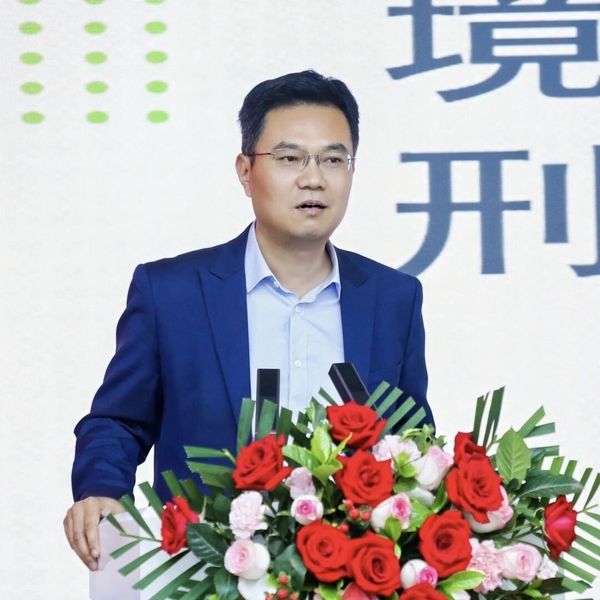
Zhang Lei
Professor at Beijing Normal University Law School
Zhang Lei, a professor at the Law School of Beijing Normal University, shared "The Role of Lawyers in Pursuing Fugitives Abroad and Recovering Stolen Assets". Regarding the issue of commutation of the period of overseas detention against the sentence, he pointed out that from a legal perspective, for persons who have been formally detained abroad for the same crime, the time they were deprived of personal freedom should be commuted. Regarding the application of the principle of specificity in extradition, he analyzed in detail its connotation and its applicable boundaries in situations such as changes in charges and increase in criminal facts, and emphasized the distinction between law enforcement cooperation and international judicial cooperation. Regarding whether long-term escape can be regarded as a severe punishment, he pointed out based on the "Cheng Sanchang case", the first case of absentee trial, that those who have fled abroad for more than 20 years, refuse to be tried before the case, and refuse to return the stolen money should be severely punished. Regarding the issue of jurisdiction over extraterritorial crimes committed by Chinese persons, he pointed out that the exercise of personal jurisdiction is not premised on the principle of double criminality. He also analyzed the application of the announcement urging surrender, and called for promoting the legalization, standardization and regularization of fugitive and stolen property recovery work to achieve "good quality, high efficiency and good results", and to strengthen prosecutorial supervision to achieve fairness and justice.
Thesis report and theme sharing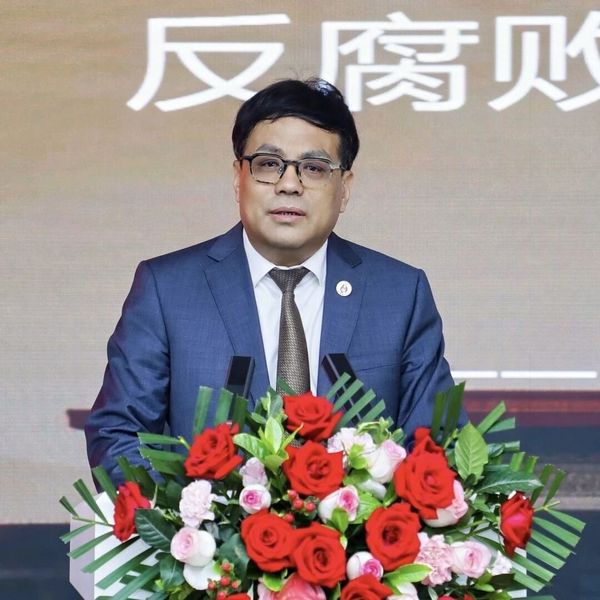 Liu Zhimin
Equity partner of Jingsh Law Firm
Honorary Director of the Criminal Committee of Jingshi Law Firm (National)
Researcher of Beijing Supervisory Law Research Association
In the paper report and theme sharing session, Liu Zhimin, Equity Partner of Jingsh Law Firm, Honorary Director of the Criminal Committee of Jingsh Law Firm (National), and Researcher of the Beijing Supervisory Law Research Association, first shared "The application problems and optimization paths of special criminal procedures in the context of anti-corruption pursuit of fugitives and recovery of stolen goods - with the absentee trial procedure and illegal income confiscation procedure as the core." He first elaborated on the research background and core topics, and then analyzed the connotation of absentee trial procedures and illegal income confiscation procedures and their compatibility with official crimes. He also sorted out five major dilemmas: blurred boundaries of the scope of application, faulty procedural connection mechanisms, imbalance of evidence standards and burden of proof, poor international judicial cooperation, and imperfect rights protection system. In terms of overseas experience and inspiration, he drew on the U.S. civil forfeiture system, Germany’s closed-loop protection of the right to trial in absentia, and Singapore’s cross-border anti-corruption judicial cooperation system, and summarized the experience of separation of procedures, differentiation of evidence standards, rigidity of rights protection, and normalization of international cooperation. Finally, he proposed the path to improve the rule of law: refine the scope of application, improve the procedural connection mechanism, optimize evidence rules, strengthen international judicial cooperation, improve the rights relief system, build a closed loop of anti-corruption litigation with "no blind spots in accountability, and full coverage of stolen goods", and contribute Chinese wisdom to global anti-corruption governance.
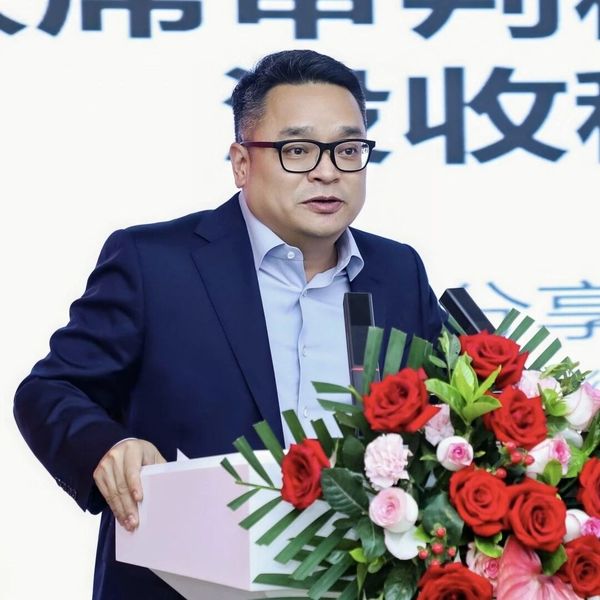
Lanhe
Equity partner of Jingsh Law Firm
Deputy Director of the Criminal Committee of Jingshi Law Firm (National)
Lan He, equity partner of Jingsh Law Firm and deputy director of the Criminal Committee of Jingsh Law Firm (National), presented "The Connection between Absentee Trial Procedures and Illegal Income Confiscation Procedures from the Perspective of Anti-corruption, Fugitive and Profit Recovery". He reviewed the current overall situation of my country's anti-corruption international pursuit of fugitives and assets, and focused on the institutional connection between absentee trial procedures and illegal income confiscation procedures in cases of asset recovery. Citing recent judicial statistics, he discussed the changing trends in the number of official crime cases, and shared the common difficulties in defense practice between gang-related crimes and official crimes. In addition, he briefly compared the historical differences in anti-corruption efforts in ancient and modern times, and talked about the practical challenges faced by lawyers in the current defense of occupational crimes. Finally, he called on legal professionals to uphold their professional responsibilities, actively provide suggestions and suggestions for improving relevant systems, and promote the continuous progress of judicial civilization.
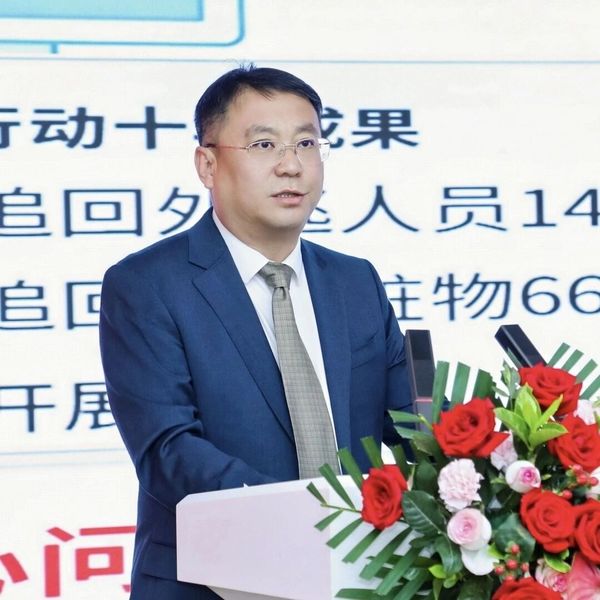
Mao Wei
Partner of Jingsh Law Firm
Director of the Capital Markets Legal Affairs Department of Jingsh Law Firm
Researcher of Beijing Supervisory Law Research Association
Mao Wei, partner of Jingsh Law Firm, director of Capital Market Legal Affairs Department of Jingsh Law Firm, and researcher of Beijing Supervisory Law Research Association, shared "From Criminal Single Wheel to Civil and Criminal Dual Track: Activation and Construction of Civil Litigation Mechanism in Cross-border Earnings Recovery". In the section "Chasing Fugitives and Pursuing Profit Recovery: Dilemmas and Solutions," he proposed that the three levels of illegal income confiscation procedures, cross-border freezing coordination, and system improvement and reference should be advanced in parallel, rather than in a progressive relationship. By elaborating on the "ten-year results of Operation Skynet", it was pointed out that the core problem is "people have come back, but the money has not." He then raised three key questions: whether the stolen goods can be recovered before the person is brought to justice, what to do with assets hidden in shell companies and offshore trusts, and whether domestic rulings can be enforced abroad, and responded based on three types of related cases. On this basis, he put forward seven suggestions: promote the normalization of illegal income confiscation procedures, establish a cross-border freezing coordination mechanism, make capital flow penetration analysis a standard configuration, promote cross-border recognition and enforcement of rulings, introduce an inversion of the burden of proof mechanism, strengthen digital asset tracking capabilities, speed up the relevant legislative process, and emphasized that the civil route is not a vassal of criminal, but an indispensable part of anti-corruption pursuit and recovery of stolen goods.
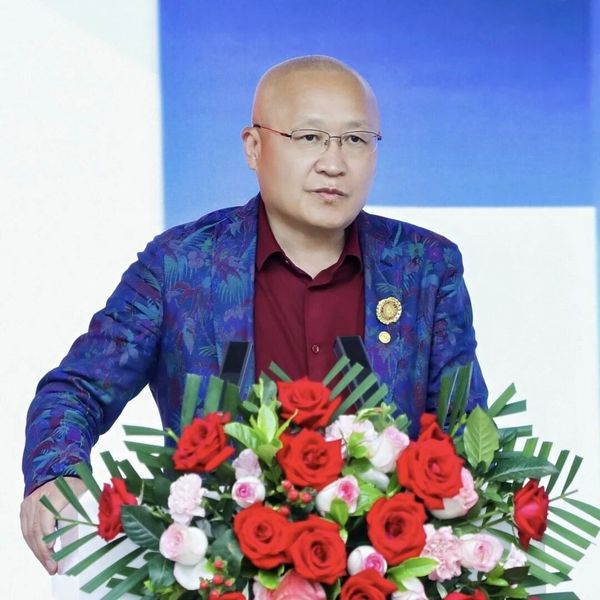
Wang Faxu
Equity partner of Jingsh Law Firm
Honorary Director of the Criminal Committee of Jingshi Law Firm (National)
Director of the Professional Crime Management Committee of the Beijing Supervisory Law Research Association
Wang Faxu, equity partner of Jingsh Law Firm, honorary director of the Criminal Committee of Jingsh Law Firm (National), and director of the Professional Crime Management Committee of the Beijing Supervisory Law Research Association, shared "Seeking truth from facts should be the basis for the standardization, legalization and formalization of job crime cases", using Zheng Mouhe's case as the main line, reviewing the defense process "from red notice order to remand for retrial", emphasizing that seeking truth from facts should be the basis for the standardization, rule of law and formalization of job crime cases. The case arose when the client was issued a red notice and was extradited from Greece after a political asylum dispute. In the jurisdictional game stage, the defense used pretrial accusation strategies to push the case down from the Guangzhou Intermediate Court to the Huadu District Court, locking in the jurisdictional level and creating procedural space for substantive defense. In the first instance, he was found guilty of both crimes and sentenced to 20 years in prison. After the appeal, the second instance was remanded for a new trial, breaking the power of res judicata and giving full play to the value of the error correction mechanism. In the retrial reversal, the crime of embezzlement was found not guilty, the charge of more than one billion yuan was not found, and the sentence was reduced from 20 years to seven years. He concluded that the successful defense of the crime of official embezzlement in the absence of insufficient evidence, as well as the key value of the remand mechanism to correct major fact-finding errors, formed a replicable methodological framework for the defense of major economic crimes, which has important reference significance for similar cases.
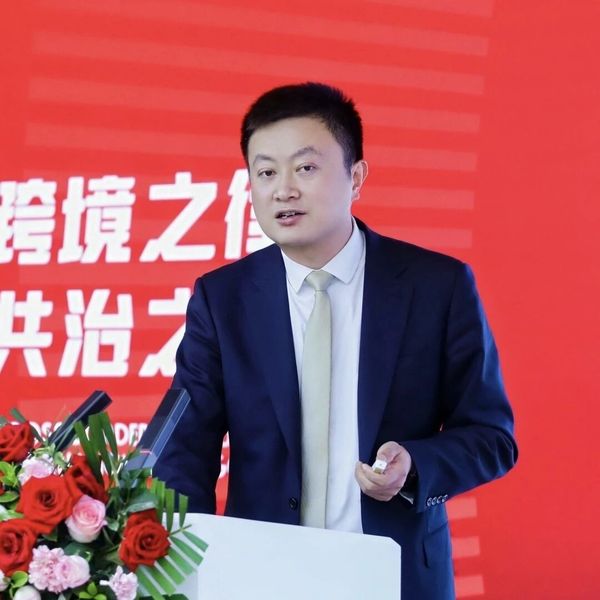
Li Zhiguang
Senior Partner, Beijing Jingdu Law Firm
Secretary General, Corporate Crime Defense and Prevention Research Center
Deputy Director of the Professional Crime Management Committee of the Beijing Supervisory Law Research Association
Li Zhiguang, senior partner of Beijing Jingdu Law Firm, secretary-general of the Enterprise-related Crime Defense and Prevention and Control Research Center, and deputy director of the Professional Crime Management Committee of the Beijing Supervisory Law Research Association, gave an in-depth explanation of the "Revolving Door" type bribery crime identification in politics and business. At the level of judicial dilemmas, he analyzed the proving difficulties caused by the separation of time and space of behavior and the hidden transactions under the "cloak of legality", and elaborated on the dilemma of determining subjective intentionality. In terms of the legal norms and theoretical distinctions in the determination of relevance, he elaborated on Article 10 of the "2007 Opinions" and the "prior agreement" theory, analyzed its limitations through academic reflection, and clarified the "substantial relevance" standard under the guidance of judicial interpretations and cases. In "Penetrating the Fog: The Core Basis for Relevance Judgment in Judicial Practice," he took Huang's case as an example to examine the correlation between profit-seeking behavior and his position from the basis of power, examine the consideration of property acceptance and profit-seeking behavior from the nature of the transaction, and construct the entire case evidence chain from the inference of subjective knowledge. He said that the defense strategy should start from cutting off the relevance, and put forward the prospect of legislative improvement and judicial unification.

Bai Feiyun
Equity Partner of Jingsh Law Firm, Chairman of Women’s Federation
Bai Feiyun, equity partner of Jingshi Law Firm and chairman of the Women's Federation, shared the "Practical Problems and Improved Countermeasures of the Absent Trial System in Corruption and Bribery Crimes". Currently, overseas pursuits of fugitives and stolen goods are faced with challenges such as the difficulty of tracing persons, convictions, stolen goods, and extradition. "Operation Skynet" has achieved phased results, but the rule of law still has shortcomings. She analyzed the institutional background and legislative positioning in detail, and raised the core problems in practice: the scope of application and obstacles to starting procedures, cross-border service, the imbalance between evidence admission and prosecution and defense, as well as the dilemmas of procedural connection, asset recovery and international collaboration. In this regard, she proposed systematic and improved countermeasures: refine the applicable standards, optimize service and evidence rules; improve rights protection, straighten out the connection of procedures; deepen international cooperation and promote the construction of integrated procedures. She emphasized that we should adhere to the trinity of punishment and deterrence, due process, and rights protection, and ultimately achieve the governance goals of "fleeing persons must be traced, illicit funds must be traced, and crimes must be held accountable."

Jing Hai Jing
Partner, Beijing Zhongwen Law Firm
Deputy Secretary-General of the Company Law Committee of the Beijing Lawyers Association
Jing Haijing, partner of Beijing Zhongwen Law Firm and deputy secretary-general of the Company Law Committee of the Beijing Lawyers Association, shared "Research on the Dilemma of Special Confiscation Procedures for Bribery Crimes". In terms of challenges and shortcomings faced by judicial practice, she sorted out four dilemmas: ambiguity in the initiation of procedures and the scope of application, difficulties in grasping the practical standards of proof and collecting evidence, insufficient protection of the rights of stakeholders, and obstacles in the connection of procedures and international judicial cooperation. In response to the above dilemma, she proposed four perfect countermeasures: first, improve legislation to enhance the clarity of the initiation and application of procedures; second, improve the rules of proof and solve the problem of evidence collection; third, strengthen rights protection and broaden the channels for procedural participation; fourth, deepen international judicial cooperation and smooth overseas channels for recovering stolen goods. Finally, she emphasized that we should move forward amidst challenges and truly prevent crimes from profiting from illegal activities and prevent overseas countries from becoming havens for crime.

Huo Weidi
Senior Partner of Jingsh Shanghai Branch
Director of the Digital Economic Crime Research Center of the Criminal Committee of Jingshi Law Firm (National)
Huo Weidi, senior partner of Jingsh Shanghai Branch and director of the Digital Economic Crime Research Center of the Criminal Committee of Jingsh Law Firm (National), presented "The "China Plan" for the Recovery of Cross-Border Corruption Assets: Practical Review and System Improvement of Illegal Gains Confiscation Procedures - Taking Typical Cases of "Operation Skynet" as Analysis Samples". She started from the rise of the system and the practical paradox of "weapons for recovering stolen goods". By analyzing the historical achievements of "Operation Skynet" and the contrast in the frequency of application of illegal income confiscation procedures and criminal absentee trial procedures, she revealed that illegal income confiscation procedures have become the most active, most effective, and most operational core tool for recovering stolen goods in the current cross-border anti-corruption struggle. Subsequently, she deeply analyzed the institutional design of the illegal income confiscation procedure, revealing its unique character that is different from ordinary criminal proceedings from the three dimensions of legal positioning, applicable conditions and proof standards. In the practice map section, she looked at the program operation logic from typical cases and analyzed a series of typical cases in "Operation Skynet", which led to four major structural problems: the "fuzzy zone" of the standard of proof, the dispute over the scope of "other property involved in the case", and cross-border disputes. He immediately proposed a four-in-one systematic plan to "legalize the recovery of stolen goods", conveying the core argument that efficiency in recovering stolen goods must not be at the expense of procedural justice.
Guest comments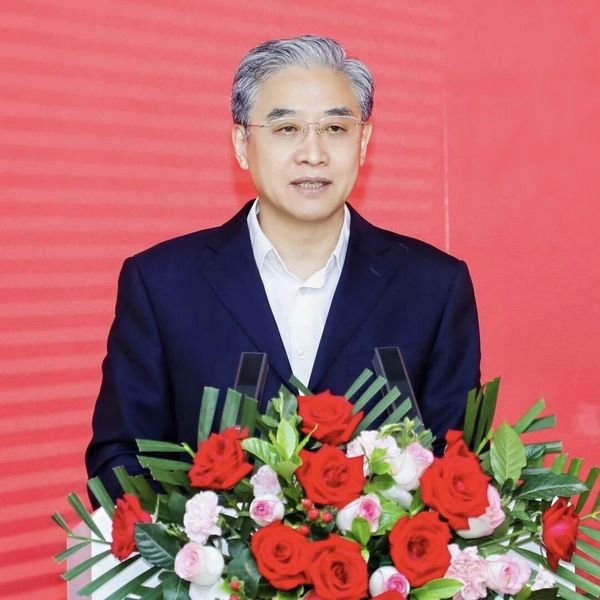 Wang Xiaodong
Former President of the Second Criminal Division of the Supreme People's Court
Senior Judge First Class, Doctor of Laws
Currently, he is the Director of the Academic Committee of the G20 Anti-Corruption and Fugitive Recovery Research Center.
Vice President of Chinese Society of Criminology
Vice President of China Criminal Procedure Law Research Association
Adjunct professor at Jilin University and China University of Political Science and Law
Wang Xiaodong, former president of the Second Criminal Division of the Supreme People's Court, first-level senior judge, doctor of law, currently director of the Academic Committee of the Group of Twenty (G20) Anti-Corruption and Fugitive Recovery Research Center, vice president of the Chinese Society of Criminology, vice president of the China Criminal Procedure Law Research Association, and adjunct professor of Jilin University and China University of Political Science and Law, fully affirmed the speeches of the guests in his comments. He pointed out that the property confiscation procedures in cases of escape or death of criminal suspects or defendants are derived from the four provisions of the Criminal Procedure Law, building a complete judicial system that integrates criminal and civil procedures. The core is the trial of rem, and the rules of evidence standards, applicable situations, property disposal, and cross-border connection are clear and complete. This seminar focused on practical difficulties and gathered professional consensus, effectively promoted the understanding and application of special procedures, demonstrated the deep cultivation and exploration of cutting-edge systems by legal practitioners, and was an important progress in judicial practice and theoretical research.
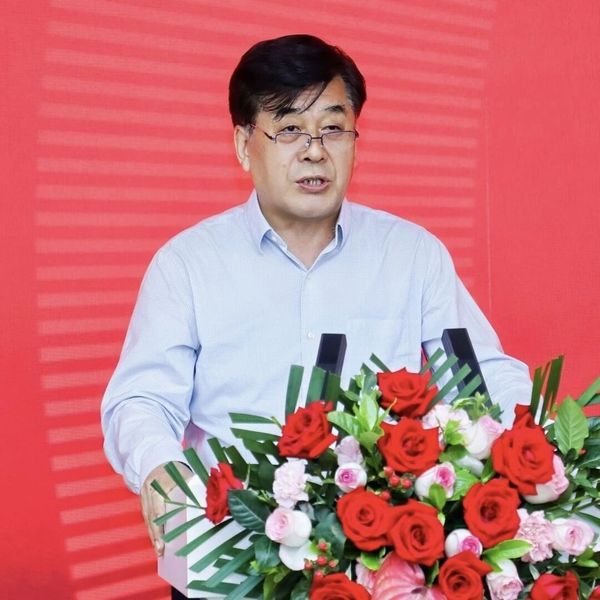
Li Zhongchun
First-level inspector of the Propaganda Department of the All-China Federation of Industry and Commerce
Former Director of Jilin Branch of People's Daily
Deputy Secretary of the Party Committee of the Reporting Department of People's Daily
Editor-in-Chief, China Business Times
Li Zhongchun, first-level inspector of the Propaganda Department of the All-China Federation of Industry and Commerce, former president of the Jilin Branch of the People's Daily, deputy secretary of the Party Committee of the Reporter Department of the People's Daily, and editor-in-chief of the China Business Times, said in his comments that this seminar was rich in content and fruitful. He pointed out that private enterprises are an important area of anti-corruption prevention work, and the Federation of Industry and Commerce is making every effort to promote the construction of clean private enterprises; currently, private enterprises face cross-border corruption and compliance challenges, and relevant judicial interpretations and compliance guidelines draw clear boundaries for enterprises. He proposed that the rule of law is the best business environment, and lawyers are important guardians of the integrity and compliance of private enterprises and should provide full-chain professional services. Finally, he congratulated the seminar on its complete success and looked forward to all sectors of society working together to support the healthy development of the private economy.
Concluding remarks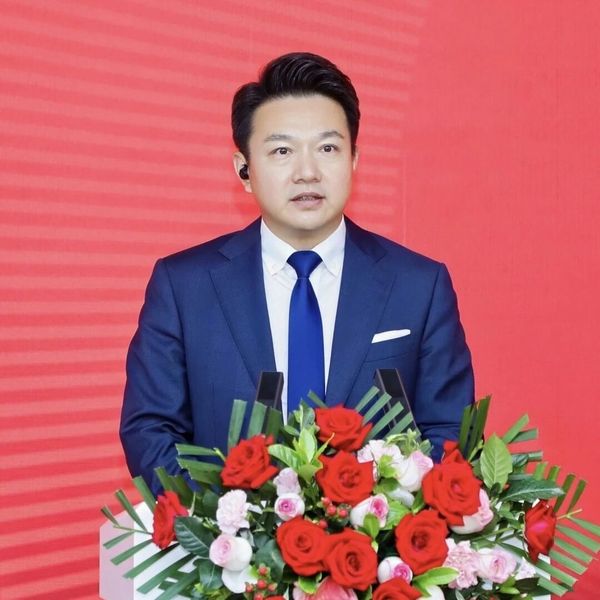 Liu Honghui
Deputy Director of Jingsh Law Firm Management Committee and Director of Cultural Brand Committee
Liu Honghui, deputy director of the Management Committee of Jingshi Law Firm and director of the Cultural Brand Committee, pointed out in his concluding remarks that this meeting is based on the new deployment of anti-corruption and international fugitive recovery at the fifth plenary session of the 20th Central Commission for Discipline Inspection and the launch of the "Skynet 2026" operation. Legal service institutions should not be absent or offside, and perform their duties accurately with professional capabilities. He elaborated on the key plans of Jingshi Law Firm in the future anti-corruption pursuit of fugitives and stolen assets: first, organize excellent papers and expert opinions into knowledge products, and widely push them through the new media matrix and academic journals; second, plan to launch highly operational case handling manuals so that theoretical results can take root; third, rely on the Overseas Cooperation Office to proactively connect with international platforms such as the G20 Anti-Corruption Fugitive and Earned Asset Recovery Research Center, and use cases and data to tell the story of China's anti-corruption and rule of law. He said that Jingsh Law Firm will use professionalism as its foundation, brand as a bridge, and responsibility as a driving force to make new and greater contributions to the country's anti-corruption cause.
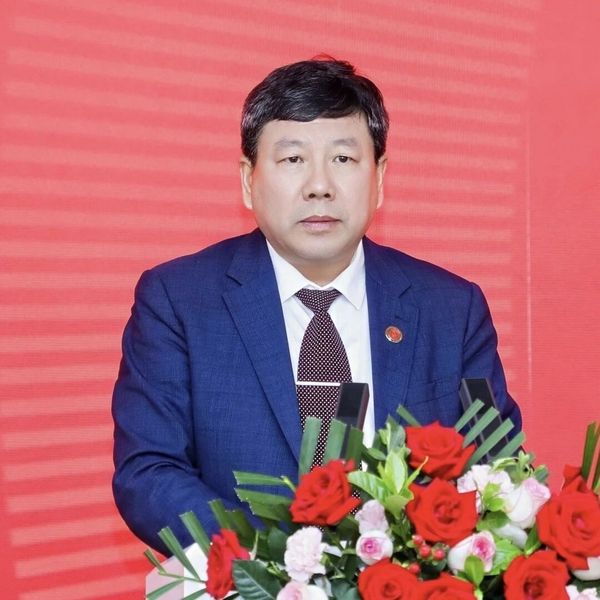
Zheng Xiaoning
Deputy Secretary of the Party Committee and Deputy Executive Director of Jingsh Law Firm
Zheng Xiaoning, deputy secretary of the Party Committee and deputy executive director of Jingshi Law Firm, said that this seminar is in-depth and refined, breaks down practical blockades, demonstrates judicial warmth, and fully demonstrates the responsibilities and academic sentiments of legal professionals. It is a conference that is based on the height of national governance and responds to the questions of the times. The seminar closely followed the central government's anti-corruption work deployment, promoted the transformation of theory and practice, and formed a number of realistic and feasible suggestions, which provided important support for improving the anti-corruption legal system with Chinese characteristics. He pointed out that lawyers are an important force in governing the country according to law. In the future, Jingshi Law Firm will strengthen professional construction, deepen collaboration with universities, scientific research institutions and international organizations, integrate into the overall national anti-corruption situation, promote the strategy of not being corrupt, not being corrupt, and not wanting to be corrupt, and making unremitting efforts to promote the construction of the rule of law and the construction of a clean China.
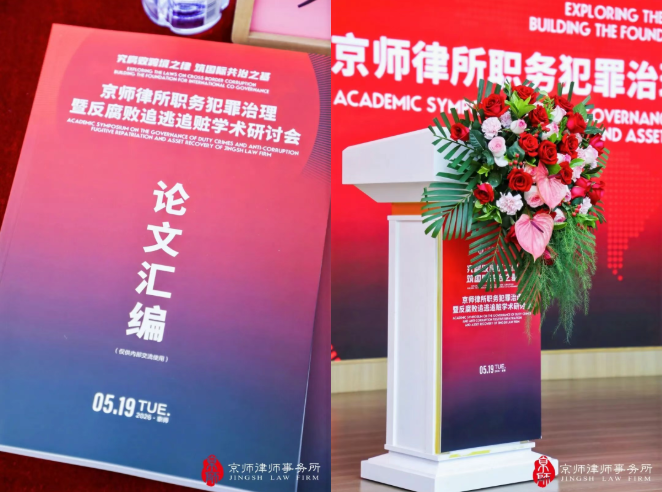
Jingshi Law Firm's academic seminar on duty-based crime management and anti-corruption, fugitive and stolen property recovery has come to a successful conclusion. The guests at the meeting reached a consensus through the collision of ideas and clarified the direction through theoretical exploration. It also injected new impetus into cultivating compound legal talents and promoting the deepening and practical work of fugitive and stolen property recovery. In this grand proposition related to the modernization of national governance and fairness and justice in the international rule of law, Jingsh Law Firm will continue to uphold its professional mission, resonate with the country's overall anti-corruption situation, and work together with all sectors of society to write professional answers for legal professionals in the complex and ever-changing international judicial cooperation environment.