In order to further focus on cutting-edge legal issues in intellectual property and explore pragmatic solutions to cutting-edge and difficult issues under the current legal framework, the first seminar of the Research and Demonstration Center on Frontier and Difficult Issues of the Intellectual Property Committee of Jingshi Law Firm (National) was held on the afternoon of May 29, 2026. This meeting focused on in-depth discussions on five cutting-edge and difficult issues in current intellectual property judicial practice. More than 30 people, including the director and deputy director of the Intellectual Property Committee of Jingsh Law Firm (National) and lawyers from the four major subcommittees, gathered together to conduct in-depth exchanges around five core topics and jointly explore solutions to practical problems. The first seminar was hosted by Li Ce, executive secretary of the Research and Demonstration Center for Frontier and Difficult Issues of the Intellectual Property Committee of Jingshi Law Firm (National).

🔺Moderator: Li Ce, Executive Secretary-General of the Research and Demonstration Center for Frontier and Difficult Issues of the Intellectual Property Committee of Jingshi Law Firm (National)
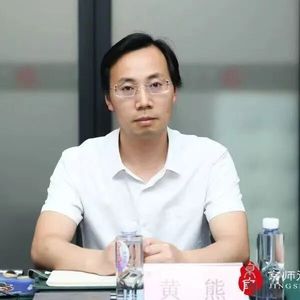
Yellow Bear
Equity partner of Jingsh Law Firm
Director of the Intellectual Property Professional Committee of Jingsh Law Firm (National)
Director of the Research and Demonstration Center for Frontier and Difficult Issues of the Intellectual Property Committee of Jingshi Law Firm (National)
In the opening speech, Huang Xiong, equity partner of Jingsh Law Firm, director of the Intellectual Property Professional Committee of Jingsh Law Firm (National), and director of the Research and Demonstration Center for Frontier and Difficult Issues of the Intellectual Property Committee of Jingsh Law Firm (National), said that the formal establishment of the Research and Demonstration Center for Frontier and Difficult Issues of the Intellectual Property Committee of Jingsh Law Firm (National) was inseparable from the dedication of Director Ma Xingzhou and Secretary Li Ce, and encouraged colleagues of the Intellectual Property Committee to speak freely and actively communicate within the group. He clarified the three positions of the center: to provide lawyers with a platform for discussion, exchange and mutual assistance on difficult issues, to focus on cutting-edge areas of intellectual property, and to help clients create value through comprehensive intellectual property operations.
This seminar focuses on five cutting-edge and difficult topics, and each topic has keynote speeches and free discussion sessions. Huang Xiong, Director of the Intellectual Property Committee of Jingsh Law Firm (National), Ma Xingzhou, Liu Dongyang, Gao Xiaoli, Wang Guangzhen, Jiang Zhe, and Guo Hang, Deputy Directors of the Intellectual Property Committee of Jingsh Law Firm (National), Rong Jin, Director of the Intellectual Property Committee of Jingsh Law Firm (National), and Guo Zhenhui, Tao Yu, Zhang Zifen, and Zhang Huafei, members of the Intellectual Property Committee of Jingsh Law Firm (National), each delivered keynote speeches on each topic. Lawyers participating both online and offline actively participated in the discussions and shared their rich practical experience and thoughts.
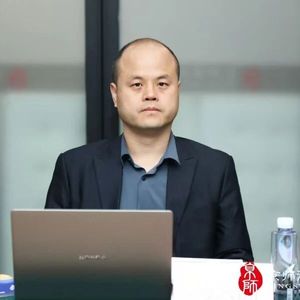
Ma Xingzhou
Deputy Director of Intellectual Property Committee of Jingshi Law Firm (National)
Executive Director of the Research and Demonstration Center for Frontier and Complex Issues of the Intellectual Property Commission of Jingshi Law Firm (National)
Ma Xingzhou, deputy director of the Intellectual Property Committee of Jingsh Law Firm (National) and executive director of the Research and Demonstration Center for Frontier and Complex Issues of the Intellectual Property Committee of Jingsh Law Firm (National), delivered an opening speech. He pointed out that in the first year of the 15th Five-Year Plan, intellectual property legal services need to focus on value creation. They must not only become an empowering platform for lawyers' professional growth, but also become a strategic partner for clients to realize the value of their intellectual property rights. He encouraged the guests to speak freely, exchange opinions, and explore new paths for industry development.
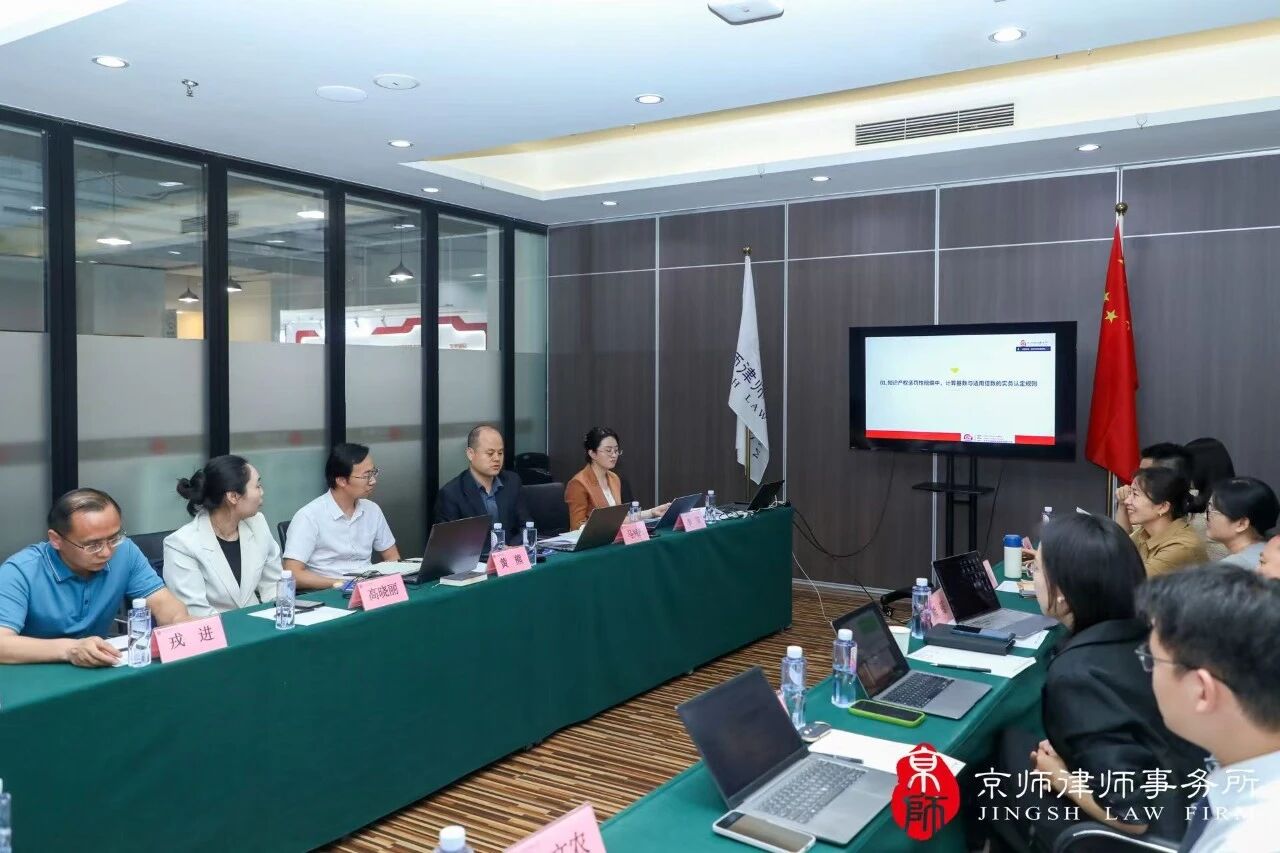
▲Conference site
Topic 1: Rules for determination of base and multiple of punitive damages for intellectual property rights
The first topic of this seminar focused on the core pain points of punitive damages practice, and conducted in-depth exchanges around calculation bases, multiple discretions, similar case rules, etc.
Combining the latest judicial interpretations and typical cases, participating lawyers pointed out that the calculation base for punitive damages must be accurately calculated, and the amount of statutory compensation must not be used as the base. Rights holders can provide quantitative evidence by multiplying the sales volume of infringing products by reasonable profits or operating profits. Regarding the determination of contribution rate, judicial practice has formed six major judicial discretion methods, including the disassembly baseline presumption method and the technical effect comparison method, which need to comprehensively consider the attributes of intellectual property rights, industry characteristics, and infringement use methods. From the perspective of litigation strategy, strengthening the evidence of reasonable expenses, referring to the average profit rate of the industry, and paying attention to the intersection of criminal and civil crimes are the implementation suggestions for trademark punitive damages claims. Based on practical confusion, participating lawyers further discussed issues such as the conflict between base and statutory compensation, profit rate deduction standards, obstruction of application of evidence, etc., and proposed that the feasibility of claims need to be strengthened through evidence refinement and logical closure.
Yellow Bear
Equity partner of Jingsh Law Firm
Director of the Intellectual Property Professional Committee of Jingsh Law Firm (National)
Director of the Research and Demonstration Center for Frontier and Difficult Issues of the Intellectual Property Committee of Jingshi Law Firm (National)
Huang Xiong, equity partner of Jingsh Law Firm, director of the Intellectual Property Professional Committee of Jingsh Law Firm (National), and director of the Research and Demonstration Center for Frontier and Difficult Issues of the Intellectual Property Committee of Jingsh Law Firm (National), emphasized in his summary that the application of punitive damages must closely follow the two major requirements of "intentionality" and "serious circumstances", taking into account both punishment deterrence and the balance of interests. He suggested that lawyers strengthen the construction of evidence chains in practice and accurately calculate core data to increase the support rate of claims.
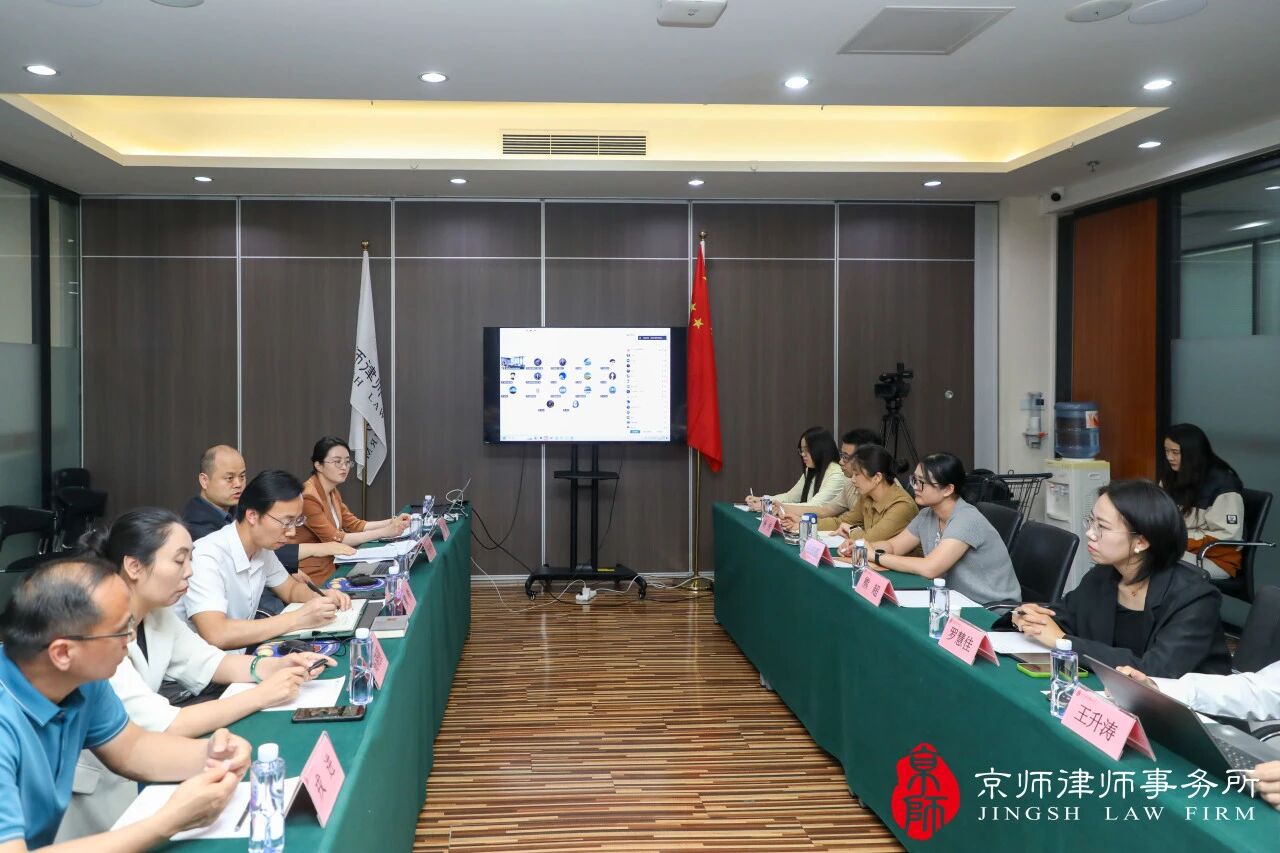
▲Conference site
Topic 2: Solutions to infringement conflicts between work names and trademark rights
The second topic focused on the rights boundary issue between work names and trademark rights, focusing on the identification and solution of infringement when the original rights holder uses the work name after the trademark transfer.
Taking related cases of the Supreme Court as an entry point, combined with the disputes over the corporate name rights of China Railway No. 2 Bureau, in the field of corporate names, participating lawyers pointed out that the scope of protection of corporate name rights should distinguish between full names and trade names. The use of corporate names with historical origins must respect the history of rights formation, and it is not appropriate to force a name change due to the withdrawal of shares. In the field of applied art, focusing on the identification of copyright of applied art works, combined with the infringement case of speaker diaphragm art works, the identification standard of "separation of artistry and practicality" was elaborated. Lawyers participating in the meeting believed that original patterns formed by laser engraving can be protected by copyright, and the attributes of the work cannot be denied because the function of the carrier is affected. Regarding the solution path, the lawyers proposed three major options: prior use defense, rights coexistence negotiation, and contract risk preemption, emphasizing that the trademark transfer agreement should clearly stipulate the ownership of related rights. The consensus reached during the discussion is that the principle of good faith must be followed, descriptive use and trademark use must be distinguished, and prior copyright and subsequent trademark rights must be balanced. The original rights holder has a higher duty of care after a trademark transfer to avoid causing market confusion.
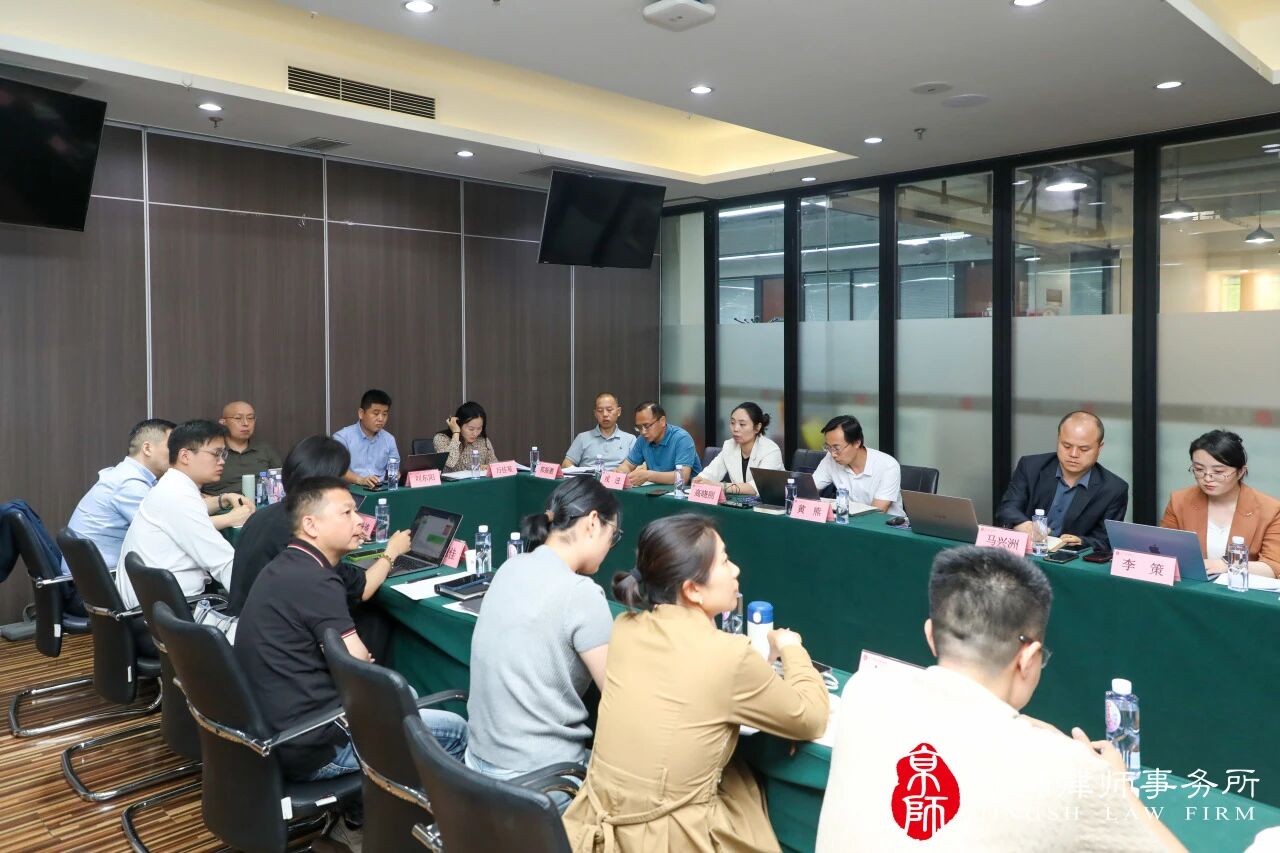
▲Conference site
Issue 3: Whether the judicial denial of the effectiveness of trademark authorization is ultra vires and interferes with administrative power
The third topic focused on the boundary between judicial power and administrative power, and discussed whether civil judgments could substantively negate the conclusion of trademark admini strative authorization.
Lawyers participating in t he meeting pointed out based on typical cases that trademark authorization and confirmation are the statutory powers of administrative agencies. Judicial review should ab ide by the principle of legality and avoid directlyoverturning the authorization decision made by the Trademark Office with civil infringement judgments. Taking the "Yuezi Shui" trademark case as an example, the first-instance civil judgment negated the effectiveness of the Trademark Office's administrative ruling, and the second-instance administrative judgment canceled the relevant trademark. Lawyers said that the "ultra vires intervention" of judicial power on administrative power will lead to idle procedures and conflicts with judgments. It is generally believed that judicial review of trademark administrative authorization actions should focus on the legality of administrative actions, avoid using civil judgments to directly deny the effectiveness of trademark administrative authorization, and prevent ultra vires interference in administrative power. When representing such cases, lawyers need to have a deep understanding of the industrial practice of commodity classification, respect the professional judgment of the Nice Classification and administrative agencies, and promote the formation of a coordinated governance structure between justice and administration.
Topic 4: Resolution mechanism when intangible cultural heritage names conflict with registered trademark rights and corporate name rights
The fourth topic focuses on the conflict of rights caused by the public cultural attributes and private exclusivity of intangible cultural heritage names.
Lawyers participating in the meeting said that the core of intangible cultural heritage names lies in the value of cultural inheritance and has strong public attributes. However, it lacks a clear positioning in the current trademark law. When the Trademark Office examines the name, it is often rejected on the grounds that it is "easy to mislead consumers." Once it coexists with an earlier trademark or is transferred, complex conflicts will arise. The lawyers analyzed the interest game between the trademark owner and the real inheritor based on the case they personally represented, "Intangible cultural heritage inheritor was sued for infringement for using the project name". They believed that in practice, the courts tended to protect the registered trademark rights, and considered the inheritor's use of the intangible cultural heritage name as "descriptive use" rather than trademark use. In response to the situation where intangible cultural heritage names are preemptively registered as trademarks, it is proposed that objections or invalidations can be filed based on Article 32 of the Trademark Law on the grounds of "prior use and certain influence", or rights can be claimed from the perspective of public policy that "is prone to adverse effects". It is generally believed that the current "Intangible Cultural Heritage Law" only sets applicable rules and lacks specific operational guidance. It is urgent to clarify the protection boundaries of intangible cultural heritage names, distinguish between trademark use and descriptive use, give priority to the reasonable use rights of intangible cultural heritage inheritors, and build a conflict resolution mechanism for administrative, judicial and industry collaboration.
Topic 5: Subsequent damage compensation relief path for malicious trademark invalidation
The fifth topic focuses on the path of compensation for damages after abusing the trademark invalidation procedure.
Lawyers participating in the meeting pointed out that the court is more cautious and has a higher threshold for identifying such claims. The plaintiff must also prove the defendant's subjective malice, procedural abuse, actual losses, and the causal relationship between the infringement and the losses. The mere fact that a request for invalidation is rejected by a court decision is not enough to constitute a malicious lawsuit. In the judgment of subjective bad faith, it is necessary to distinguish between legitimate rights protection and procedural abuse. If the defendant files an invalidation declaration based on a reasonable basis of rights or factual knowledge, even if the case is ultimately lost, it should not be determined as bad faith. From the perspective of litigation strategy, the scope of losses that lawyers can claim include loss of business opportunities due to procedural delays, reasonable expenses incurred in response to the invalidation declaration (such as attorney fees, agency fees), etc., but sufficient evidence must be provided to quantify it. It is generally believed that courts tend to uphold the principle of modesty in practice, protect the legitimate rights of parties to safeguard their rights in accordance with the law, and prevent the reverse abuse of the malicious litigation system; for batch invalidation declarations for the purpose of suppressing business and demanding high settlement funds, rights holders can still obtain support by proving their "malice" and "damaging consequences", but the standard of proof is higher.
As the first seminar of the Research and Demonstration Center for Frontier and Difficult Issues of the Intellectual Property Professional Committee of Jingshi Law Firm (National), this conference fully demonstrated Jingshi Law Firm’s professional responsibility of proactive response and collaborative innovation in the digital era. It not only provided valuable ideas for the practical resolution of complex intellectual property cases, but also injected new vitality into the improvement of Jingshi Law Firm’s professional intellectual property research capabilities. In the future, the Intellectual Property Committee of Jingsh Law Firm (National) will rely on this research center to continue to focus on cutting-edge and difficult issues in the field of intellectual property, regularly carry out special seminars and experience sharing activities, promote the formation of industry consensus and the unification of adjudication standards, and contribute the wisdom of Jingsh Law Firm to the construction of a powerful country in intellectual property.