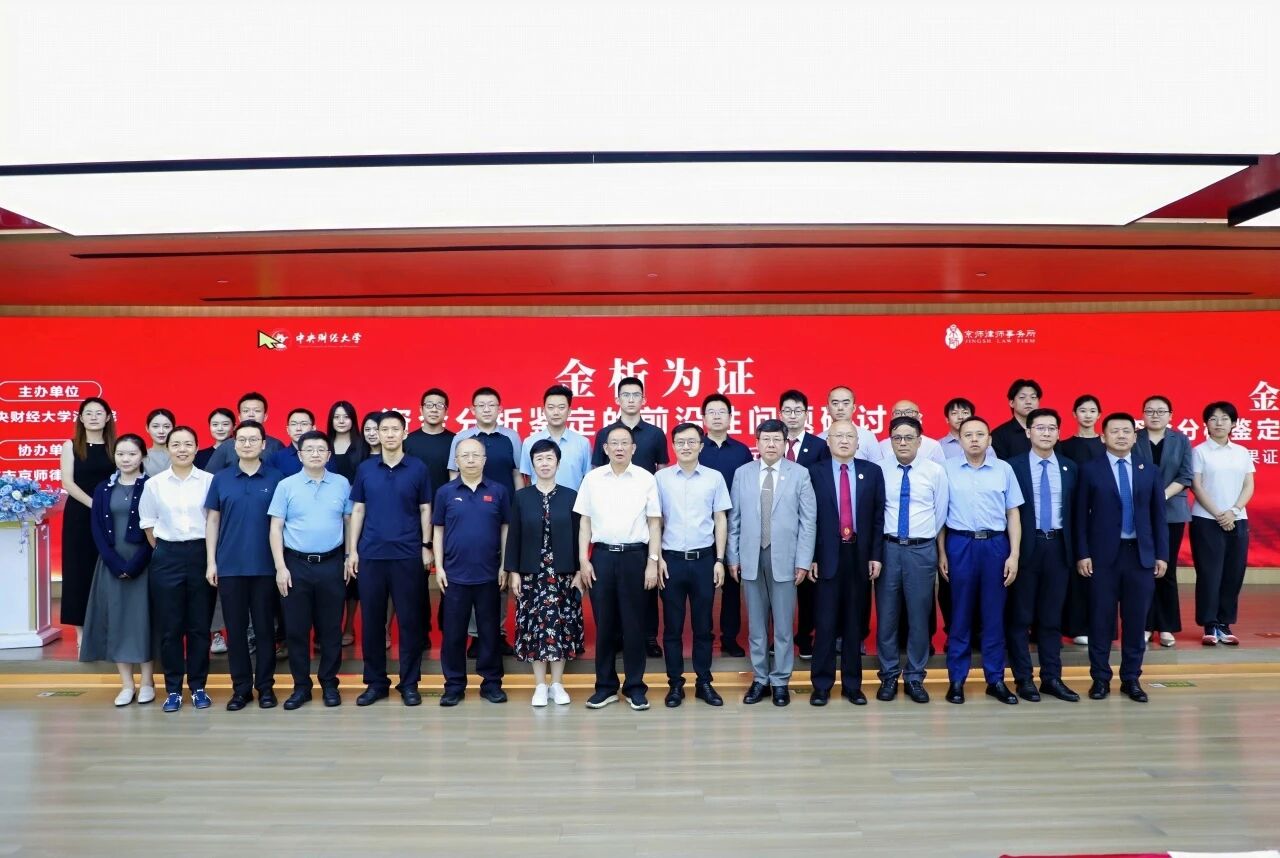
In order to steadily promote the construction of the fund analysis and appraisal system and deeply explore the theoretical frontier issues in the advancement of the system, on the afternoon of July 11, the Law School of the Central University of Finance and Economics and the Institute of Discipline Inspection and Supervision held a seminar on cutting-edge issues in fund analysis and appraisal of "Gold Analysis as Evidence" at the Jingshi Lawyer Building. Experts and scholars from universities, public security agencies, forensic appraisal institutions and legal practice circles gathered together to discuss cutting-edge topics such as the theoretical basis, institutional norms and judicial practice of fund analysis and appraisal. The seminar was hosted by Li Wei, associate professor at the Central University of Finance and Economics School of Law, the Institute of Discipline Inspection and Supervision, and director of the Continuing Education Office.
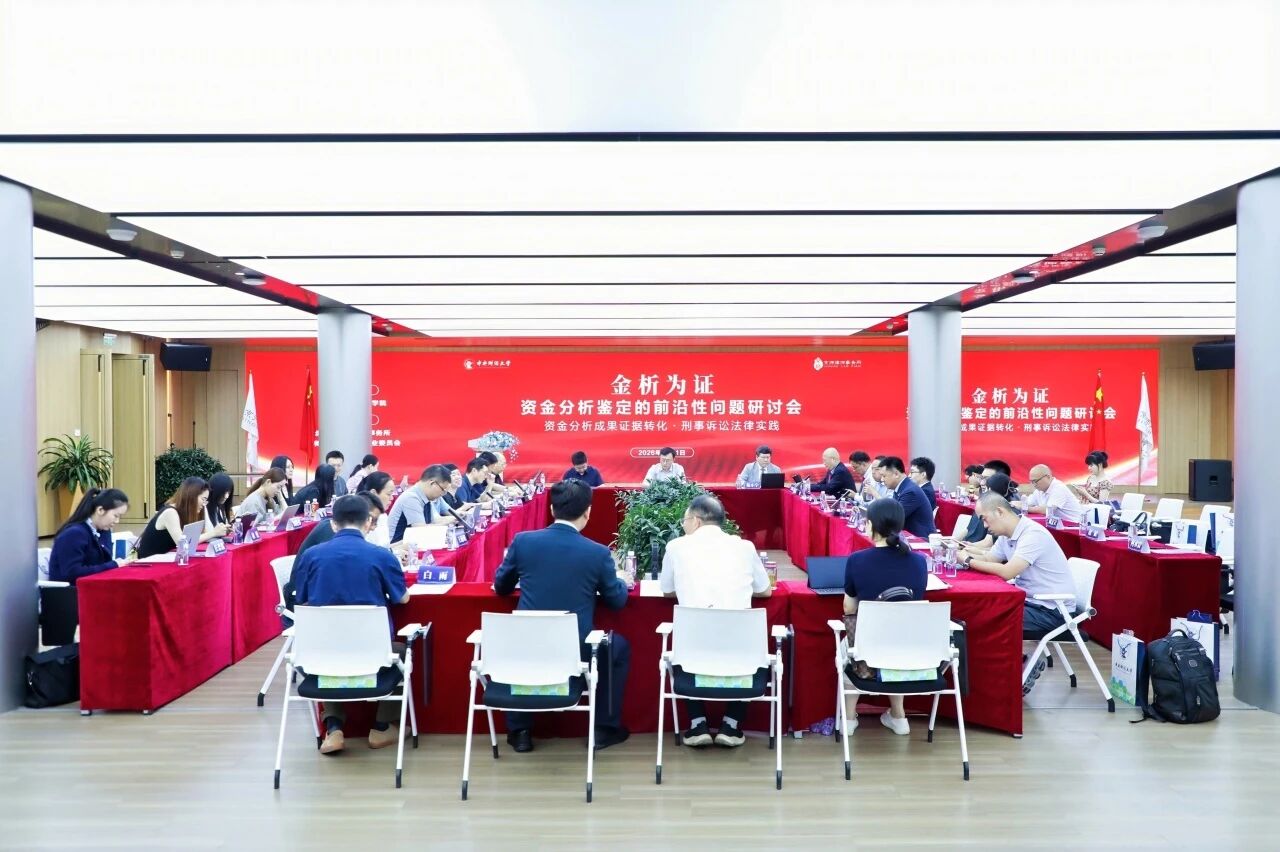
▲Conference site
Opening Speech
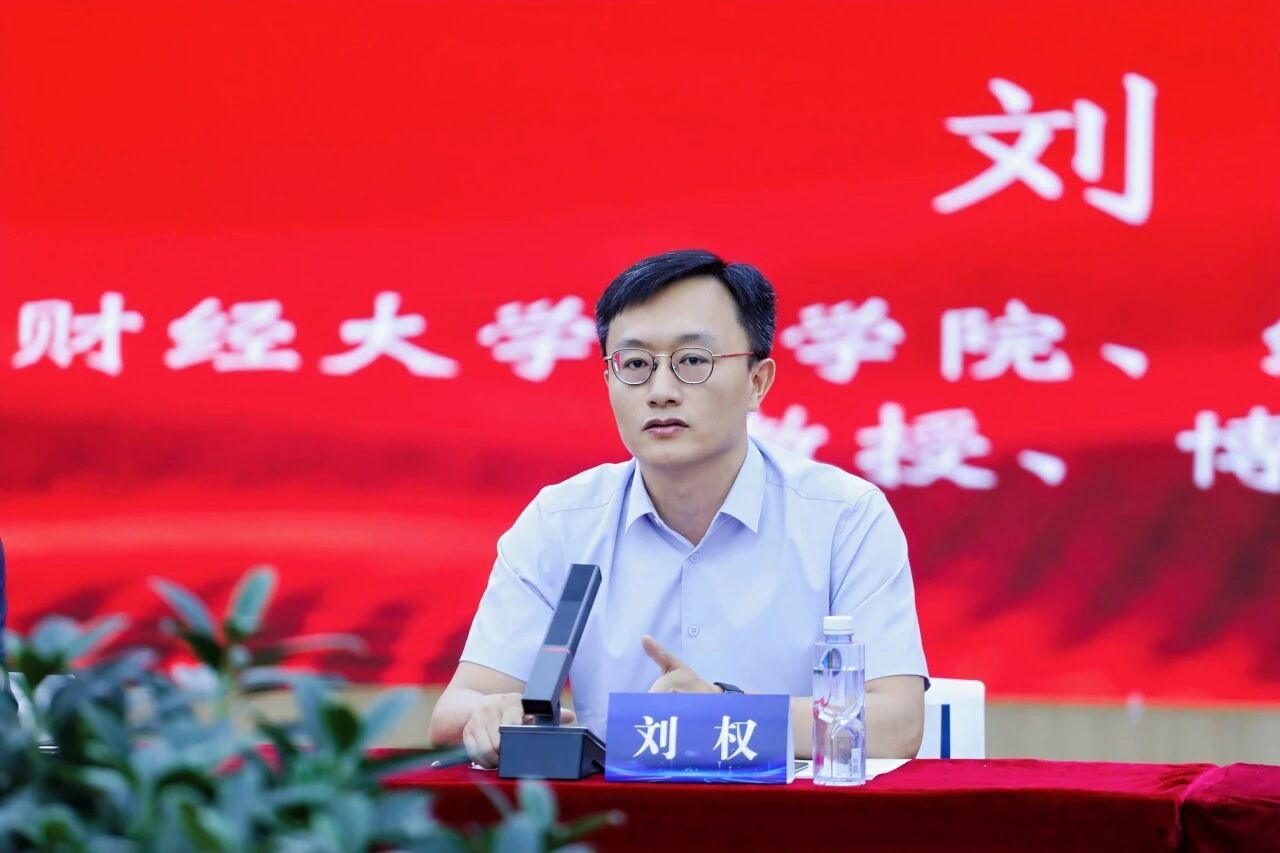
▲Liu Quan, deputy dean, professor and doctoral supervisor of the School of Law and the Institute of Discipline Inspection and Supervision of the Central University of Finance and Economics
Liu Quan, deputy dean, professor and doctoral supervisor of the School of Law and the Institute of Discipline Inspection and Supervision of the Central University of Finance and Economics, delivered an opening speech, introducing that the School of Law and the Institute of Discipline Inspection and Supervision have long been committed to the intersection of law and economics, and have formed fruitful academic achievements in the fields of financial legal system, criminal litigation and judicial appraisal. They have cultivated a large number of compound talents who understand both law and financial data. They look forward to contributing academic wisdom and practical experience to the standardized development of the fund analysis and appraisal system.
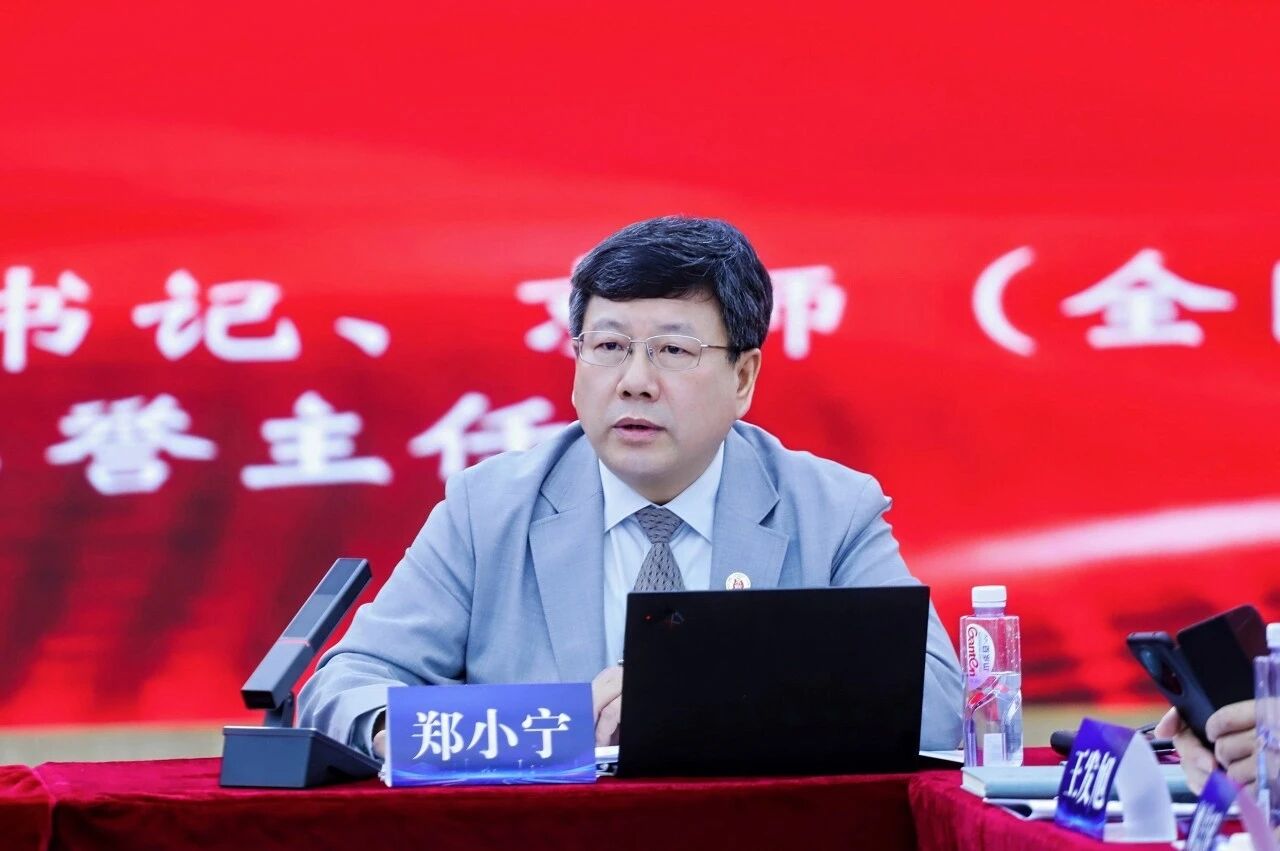
▲Zheng Xiaoning, deputy secretary of the Party Committee of Jingsh Law Firm and honorary director of the Criminal Committee of Jingsh Law Firm (National)
Zheng Xiaoning, deputy secretary of the Party Committee of Jingsh Law Firm and honorary director of the Criminal Committee of Jingsh Law Firm (National), delivered a speech. He believes that this seminar focuses on the issue of evidence transformation of financial analysis results in criminal proceedings, and is an important practice for in-depth implementation of Xi Jinping’s thought on the rule of law and serving the trial-centered criminal system reform. He also introduced that Jingshi Law Firm adheres to the leadership of party building and has now formed a legal service network covering the whole country and extending to the world. It has accumulated a wealth of cases in the fields of economic crime defense, property criminal defense and other fields, providing a broad practical vision for the improvement of criminal legislation and the optimization of evidence rules.
Keynote Speech (1)
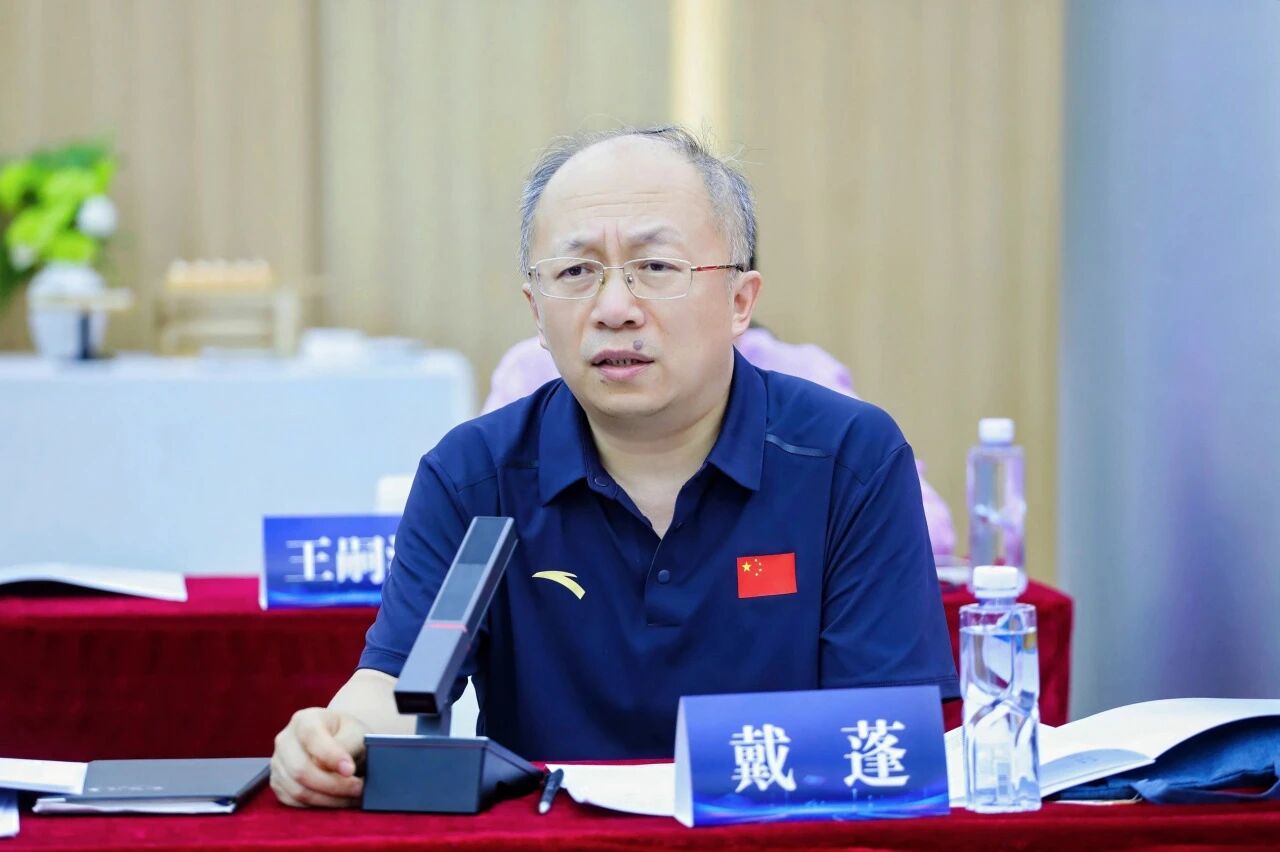
▲Dai Peng, Dean and Professor of the Investigation College of the People’s Public Security University of China
Dai Peng, dean and professor of the Investigation College of the People's Public Security University of China, spoke on the topic "Specialized Issues in Fund Analysis and Appraisal". Starting from the historical perspective of the evolution of physical evidence, he pointed out that the emergence of financial analysis and appraisal is the inevitable extension of the form of physical evidence from tangible physical evidence to electronic data and then to financial data. The fund analysis platform breaks the old model of relying on paper bank statements and enables online data interaction with various banks. Faced with the above situation, financial analysis relies on internal public security and industry big data to solve the problem of audit reports having limited probative power in criminal proceedings because most of the data comes from the companies or related parties involved in the case, and provides more powerful technical evidence support for the determination of facts in economic crime cases. However, data quality, standardization, standardization, etc. need to be continuously improved in practice.
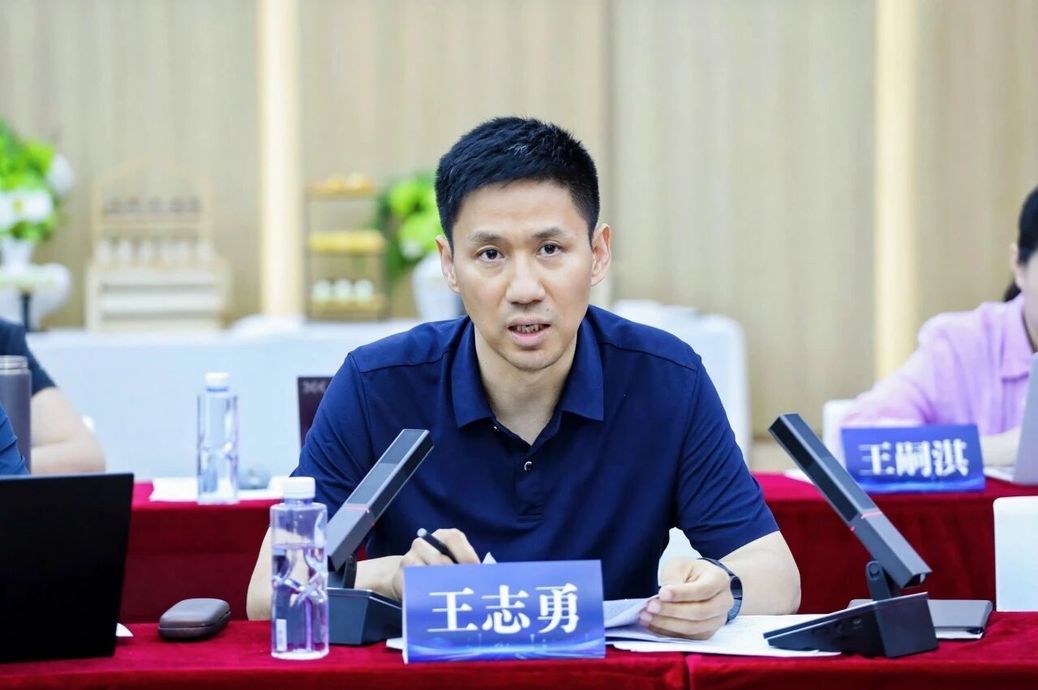
▲Wang Zhiyong, deputy captain of the Economic Investigation Corps of Beijing Municipal Public Security Bureau
Wang Zhiyong, deputy chief of the Economic Investigation Corps of the Beijing Municipal Public Security Bureau, spoke on the topic "The Boundary between Fund Analysis Reports and Appraisal Opinions". Starting from the complexity of economic crimes and focusing on the five dimensions of subject qualifications, procedural specifications, data sources, methodological standards, and conclusion validity, this paper systematically clarifies the essential difference between the fund analysis report used for internal research and judgment and the fund analysis and appraisal as litigation evidence, and provides important practical guidance for handling fund evidence. The early capital analysis report serves the preliminary investigation and judgment before filing the case. The data source is flexible, the method focuses on probability speculation, and the conclusion points to the direction of investigation. Fund analysis and identification must be made by appraisal institutions and appraisers with qualifications issued by the Ministry of Public Security. Legal procedures must be strictly followed. Data sources must be obtained through statutory investigations. Methods must be based on technical standards disclosed by the Ministry of Public Security. The conclusions have stronger evidentiary attributes. In particular, capital analysis and identification penetrates the capital flow path and has unique value when financial information is missing or falsified, providing clear coordinates for the application of evidence in practice. On this basis, the relationship between capital analysis and appraisal, forensic accounting appraisal and special audit was analyzed, and the different nature, function and evidence status were clarified.

▲中国政法大学证据科学研究院教授、北京司法鉴定业协会副会长王旭
Wang Xu, professor at the Institute of Evidence Science at China University of Political Science and Law and vice president of the Beijing Forensic Expertise Association, took the title "Definition and Consideration of Specialized Issues in Forensic Expertise Legislation" from the perspective of specialized issues to provide an important theoretical framework for clarifying the boundary between appraisal power and trial power. She pointed out the current problems of "specialized issues" in forensic identification, and refined forensic identification into four major characteristics: factuality, professional specificity, judicial relevance, and limited openness, emphasizing that identification conclusions must be scientific evidence that is testable, traceable, and admissible. Add the statutory concept of "specialized issues" to the legislation and eliminate the misunderstanding that "only four categories are called judicial appraisals"; clarify the boundaries between appraisal power and trial power, distinguish technical facts from normative facts; establish a pros and cons list at the operational level, and unify the rules for scientific evidence review.

▲Qi Fengliang, deputy director of the Economic Investigation Technology Division and second-level police technical director of the Identification Center of the Ministry of Public Security
Qi Fengliang, deputy director of the Economic Investigation Technology Division and Level 2 Police Technology Director of the Appraisal Center of the Ministry of Public Security, spoke on the topic of "Fund Analysis and Appraisal and Traditional Appraisal". He pointed out that as the 12th appraisal project of the public security agency, the system design of fund analysis and appraisal has focused on the construction of legal norms and standards from the beginning. Related supporting appraisal procedures, institutional management, laboratory specifications and quality management systems have been gradually introduced, and training materials and question banks have been advanced simultaneously. He comparatively analyzed the differences between traditional appraisal and fund analysis and appraisal from three dimensions: basic theory, core orientation, and general methods. Traditional appraisal and fund analysis and appraisal are not substitutes. Fund analysis and appraisal rely on fund data and algorithm models. The combination of the two can form a more complete evidence chain, jointly serve the needs of judicial proof, and improve the efficiency and accuracy of case investigation and judicial litigation.
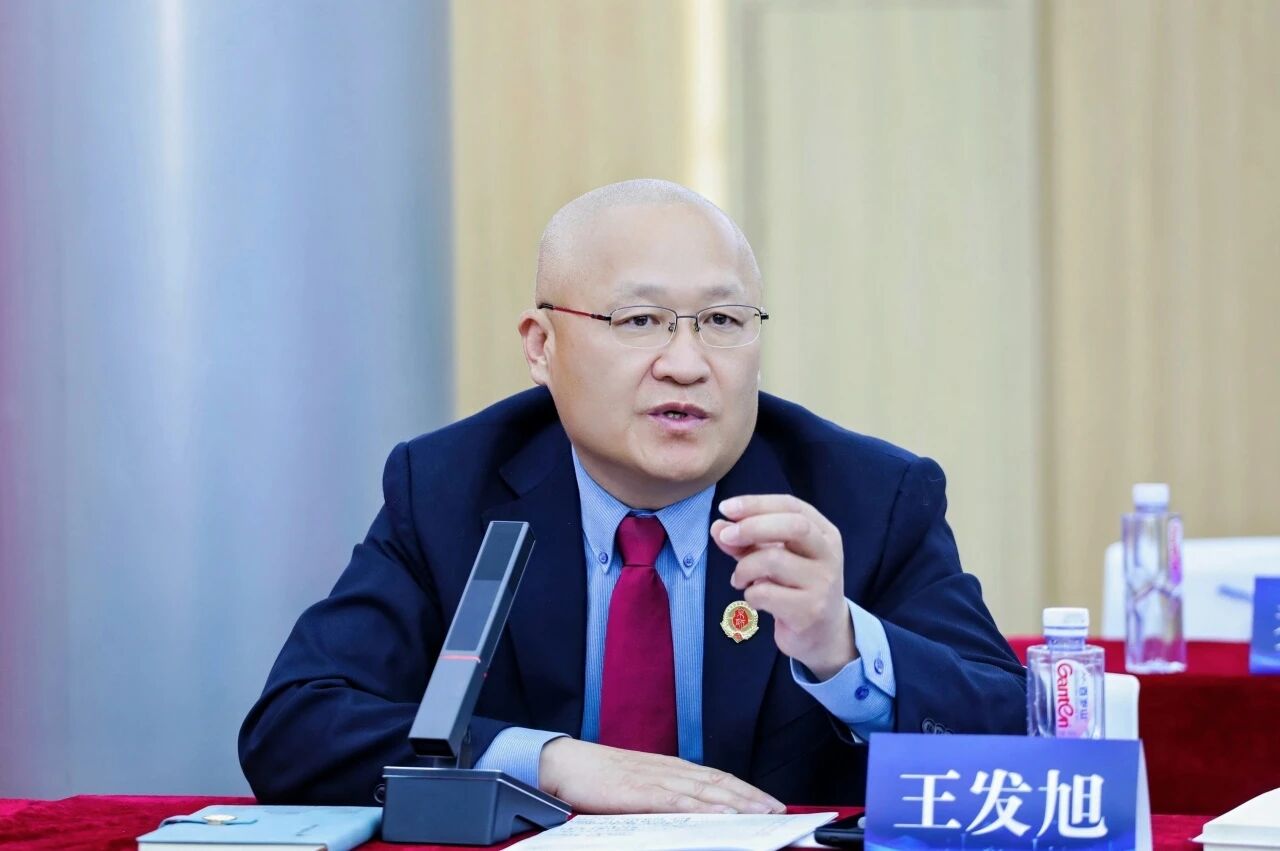
▲Wang Faxu, equity partner of Jingsh Law Firm and honorary director of the Criminal Committee of Jingsh Law Firm (National)
Wang Faxu, equity partner of Jingsh Law Firm and honorary director of the Criminal Committee of Jingsh Law Firm (National), spoke on the topic of "Financial Analysis Overturning the Audit Report and Talking about Fund Analysis and Appraisal". Based on a venture capital project case he personally handled, he shared his experience in how capital analysis and identification can effectively confront and overturn the prosecution's audit report in defense practice. In this case, the audit report determined that the client’s project had made huge profits and used this as the basis for the core accusation. The defense team, together with certified public accountants and lawyers, conducted an in-depth financial analysis of massive bank flows and found that most of them were actually government prepayments and land replacement payments, rather than actual profits. By clearly defining the nature of the funds, the original audit report was essentially overturned during the court hearing, and the amount involved was significantly reduced after recalculation. He pointed out that traditional audit reports only reflect superficial phenomena at the level of accounting documents and lack penetrating analysis of the nature of capital flows. However, if the capital analysis reports issued by the public security organs lack third-party review, the space for cross-examination by the defense is extremely limited. He called for standardizing the procedures for fund analysis and identification of public security organs, introducing third-party social review agencies, and giving the defense the right to effectively cross-examine to achieve a balance between prosecution and defense. He concluded and demonstrated that technical investigation is necessary in the context of increasingly concealed new criminal methods, but identification work must return to the rule of law and ensure the objectivity and credibility of evidence through standardized procedures.
Keynote Speech (2)
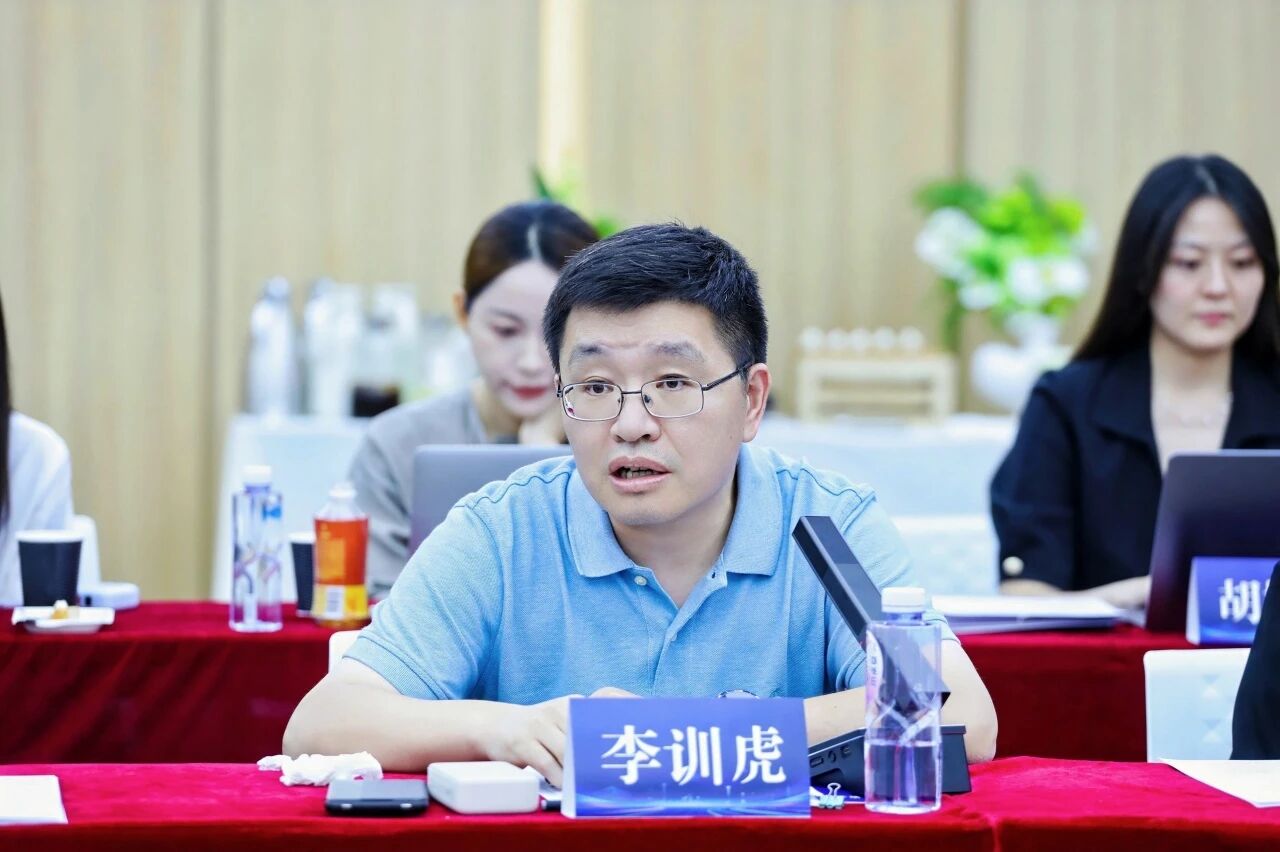
▲Li Xunhu, professor and doctoral supervisor at the Law School of Renmin University of China
Li Xunhu, a professor and doctoral supervisor at the School of Law of Renmin University of China, took the title "The Difference between Fund Analysis and Appraisal and Intelligence Research and Judgment" as the title. He clarified the functional boundaries of fund analysis and appraisal and intelligence research and judgment from the institutional level, and provided clear theoretical guidance for accurately identifying the evidence attributes of the two in practice. He pointed out that the current economic investigation work of public security organs has formed a model in which "intelligence-guided investigation" and "financial analysis as evidence" coexist, with the former serving investigation and the latter serving litigation. Although the two share financial data and analysis technology, there are fundamental differences in data scope, purpose orientation and legal attributes: the data sources of intelligence research and judgment are more flexible, and can comprehensively use data obtained according to law, historical precipitation data and public information, with the purpose of discovering criminal clues and serving investigation decisions; financial analysis and appraisal have strict requirements on the source of inspection materials and must be obtained in accordance with legal procedures, with the purpose of solving specialized problems and providing evidence support for court fact determination. He believes that what determines the legal attributes of electronic data is not the data itself, but the institutional program structure to which it belongs - intelligence research and judgment belongs to the scope of investigative powers, while appraisal opinions belong to the scope of proof of the evidence system. The two do not compete with each other, but respectively undertake different functions of "conversion of data into intelligence" and "conversion of data into evidence", and together constitute a complete chain of evidence for criminal justice in the digital era.

▲Xiang Kun, instructor of the Data Research and Judgment Brigade of the Economic Investigation Detachment of Suzhou Municipal Public Security Bureau
Xiang Kun, instructor of the Data Research and Judgment Brigade of the Economic Investigation Detachment of Suzhou Municipal Public Security Bureau, gave a systematic introduction to the exploration and practice of Suzhou Economic Investigation in the transformation of evidence from financial data analysis results with the title of "Suzhou Model of Transforming Evidence of Financial Data Analysis Results". He believes that the core of capital data analysis lies in exploring the correlation between capital data and between capital data and persons involved in the case. Inspection reports are legally classified as inspection transcripts. Each conclusion can be traced back to the original flow record, which has the advantage of cross-examination of "what you see is what you get". For difficult and complex cases where the chain is broken and requires subjective inference, it should be resolved through appraisal opinions.
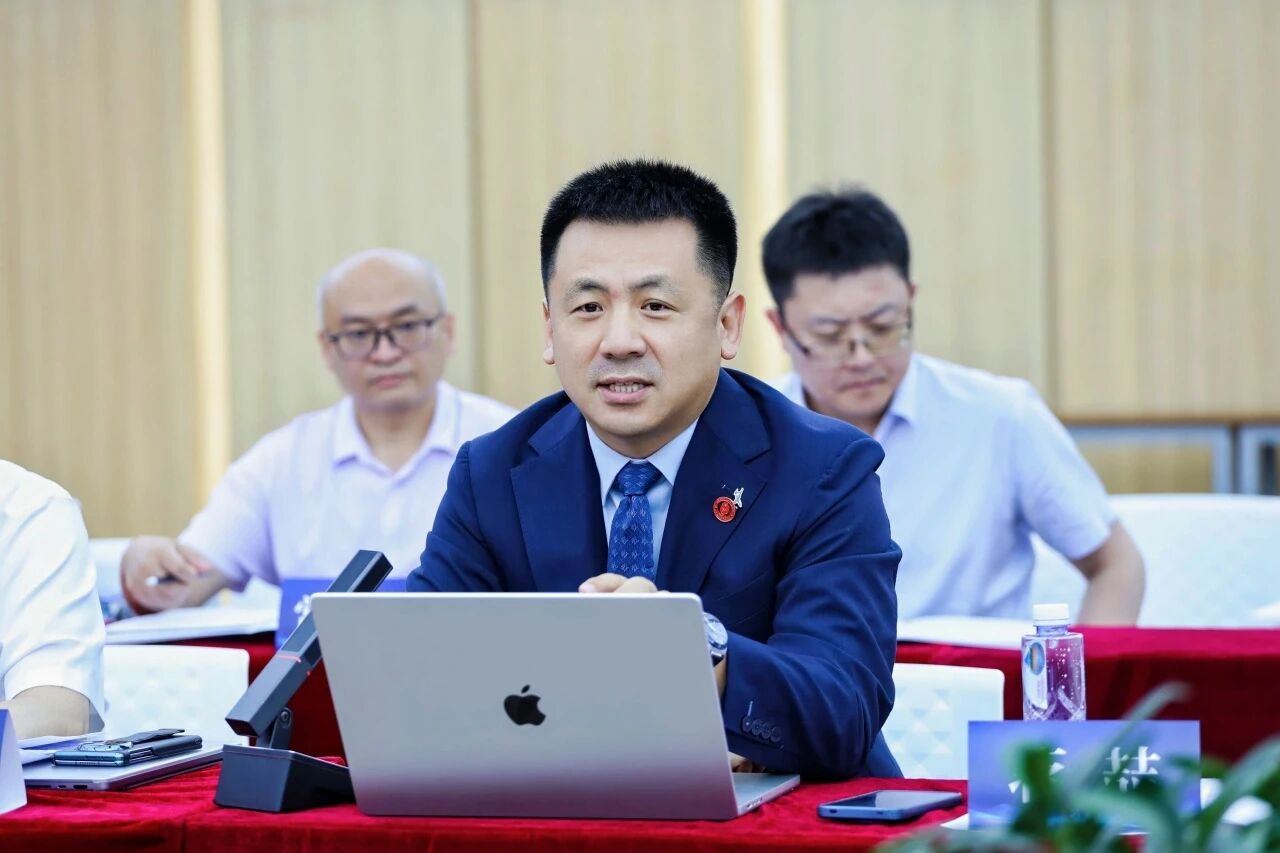
▲Jiang Zhe, equity partner of Jingsh Law Firm (Shenyang) and deputy director of the Criminal Committee of Jingsh Law Firm (National)
Jiang Zhe, equity partner of Jingsh Law Firm (Shenyang) and deputy director of the Criminal Committee of Jingsh Law Firm (National), spoke on the topic of "Financial Analysis and Appraisal and Analysis of All-Dimensional Issues of Intellectual Property Rights". He pointed out that intellectual property crime has the characteristics of industrialization and chaining. The production and sale of counterfeiting involves multi-level, cross-regional capital pools and multi-layered account disguises, which are difficult to penetrate through traditional auditing methods. Fund analysis and identification can play a probative value in four dimensions: accurately identify the amount involved and illegal income, peel off fund transactions layer by layer, distinguish infringement income and legitimate business income, and provide a basis for sentencing levels; lock the criminal subject and the complete capital chain, link account, communication, and logistics data to distinguish principals and accomplices and distribution levels; auxiliary It helps to prove subjective intention and proves "profit-making purpose" and "subjective knowledge" through abnormal fund settlement, fixed income distribution model, concealed transfer and other fund characteristics; the applicable scenarios of the case are highly matched - batch distribution, multi-level agency profit sharing, third-party payment and private account mixed settlement, which are highly consistent with the advantages of fund analysis and identification. Jiang Zhe also pointed out that the current application in this field is still in the exploratory stage, and public precedents are scarce. It faces review challenges such as data collection and cleaning, algorithm scientificity, and procedural compliance. At the same time, there are also practical difficulties such as neutrality doubts caused by the self-issued reports of the investigative agencies and the protection of the defense’s right to cross-examination. With the introduction of relevant technical standards, big data identification of funds will bring important changes to the evidence pattern in intellectual property criminal cases.
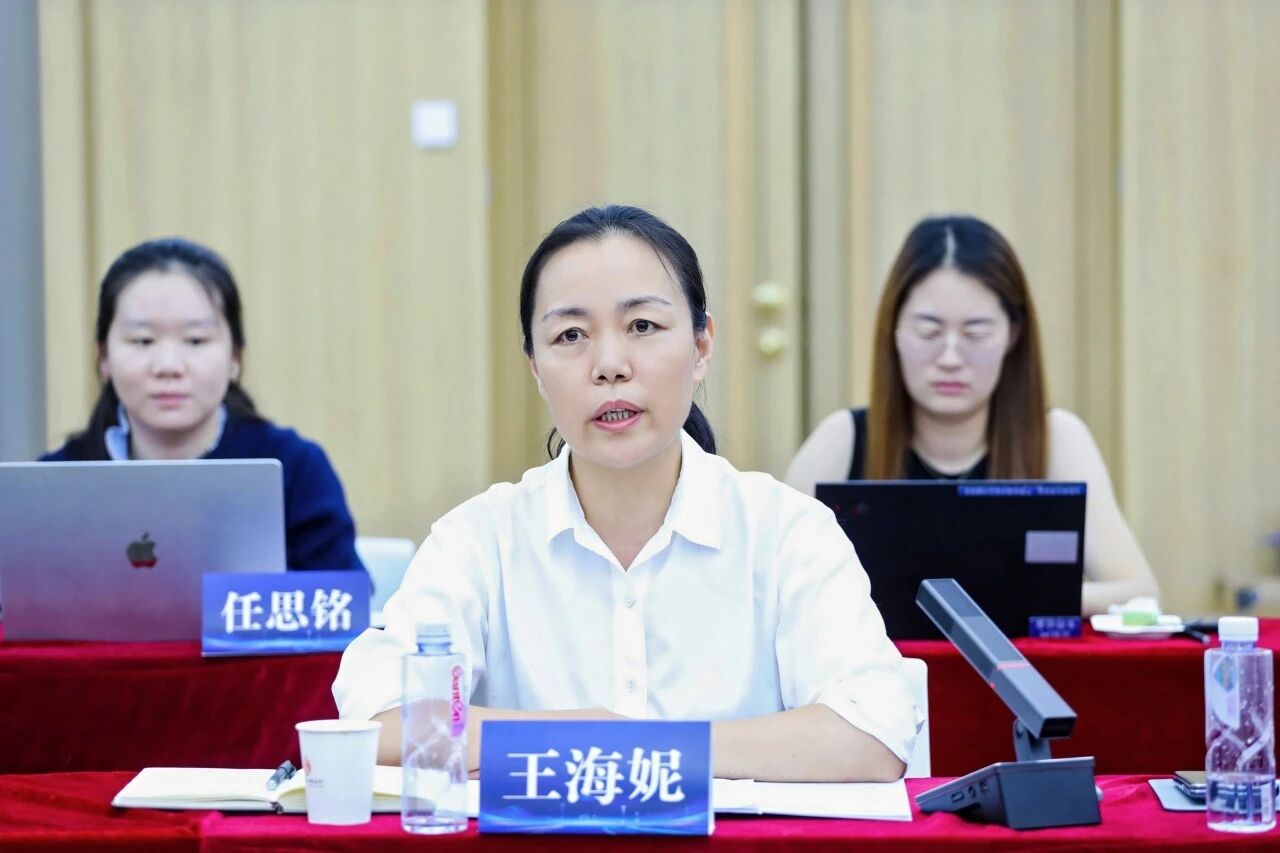
▲Wang Haini, leader of the intelligence guidance and investigation brigade of the Economic Investigation Detachment of Weifang City Public Security Bureau, Shandong Province
Wang Haini, leader of the Intelligence Guidance and Investigation Brigade of the Economic Investigation Detachment of the Weifang City Public Security Bureau of Shandong Province, provided practical experience for the analysis and identification of capital data with the title of "Weifang Experience in Fund Data Analysis Reports as Evidence". Combining years of economic investigation practice, she systematically introduced Weifang's exploration process in promoting the use of capital data analysis reports as evidence. In the early days, when the legal qualifications were still unclear, we insisted on safeguarding rights with quality and taking objectivity and authenticity as the bottom line; as relevant procedural regulations and court science and technology standards were gradually introduced, reports are now issued strictly in accordance with the format of financial analysis and appraisal opinions.
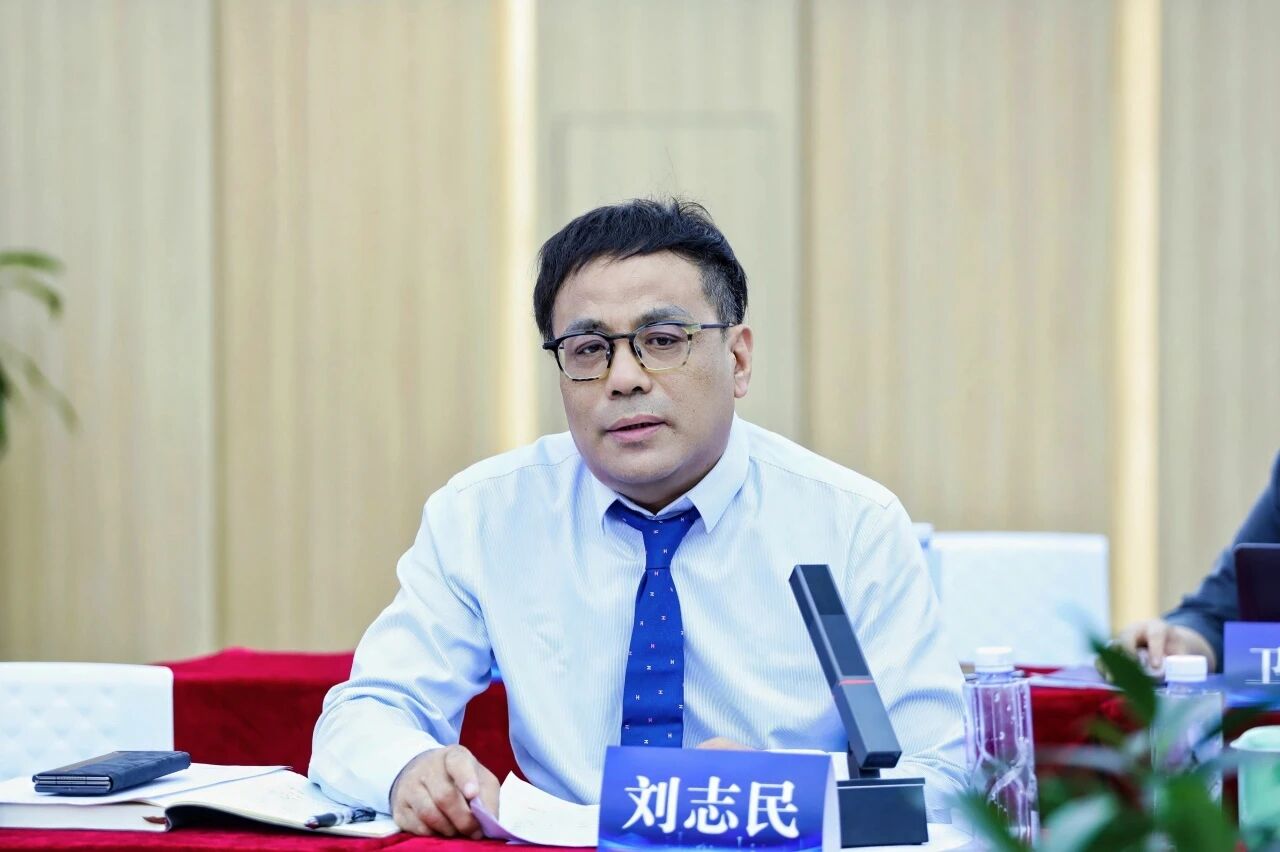
▲Liu Zhimin, equity partner of Jingsh Law Firm and honorary director of the Criminal Committee of Jingsh Law Firm (National)
Liu Zhimin, equity partner of Jingsh Law Firm and honorary director of the Criminal Committee of Jingsh Law Firm (National), spoke on the topic of "Lawyers' Thoughts on Fund Analysis and Appraisal in Criminal Defense". He entered into the case through a corruption case - the case-handling agency used the "Fund Flow Appraisal Opinion" issued by the fund investigation and control analysis system as the core evidence to determine the amount involved. When the appraiser appeared in court, he continuously asked three core questions: what is the algorithmic logic of the system's default determination of "fund return"; whether the entire process log of data reading, conversion, and analysis can be provided; whether the transfer note field is an exact match or a fuzzy match extraction. The appraiser was unable to give a clear answer in court, thus shaking the basis of the appraisal opinion. He proposed that lawyers should work in three dimensions in response to capital analysis and appraisal: shift from formal review to substantive penetration, review the scientificity, neutrality and verifiability of the algorithm; make good use of evidence rules, distinguish the different effects of appraisal opinions and inspection reports, and question financial evidence that lacks relevance to subjective constituent elements; and win the judge's support for the expert assistant's application to appear in court through face-to-face communication that accurately grasps the "flaws" of the appraisal opinion. He said that fund analysis and appraisal test a lawyer’s ability to understand complex technologies, apply rules of evidence, and effectively communicate with case-handling authorities.
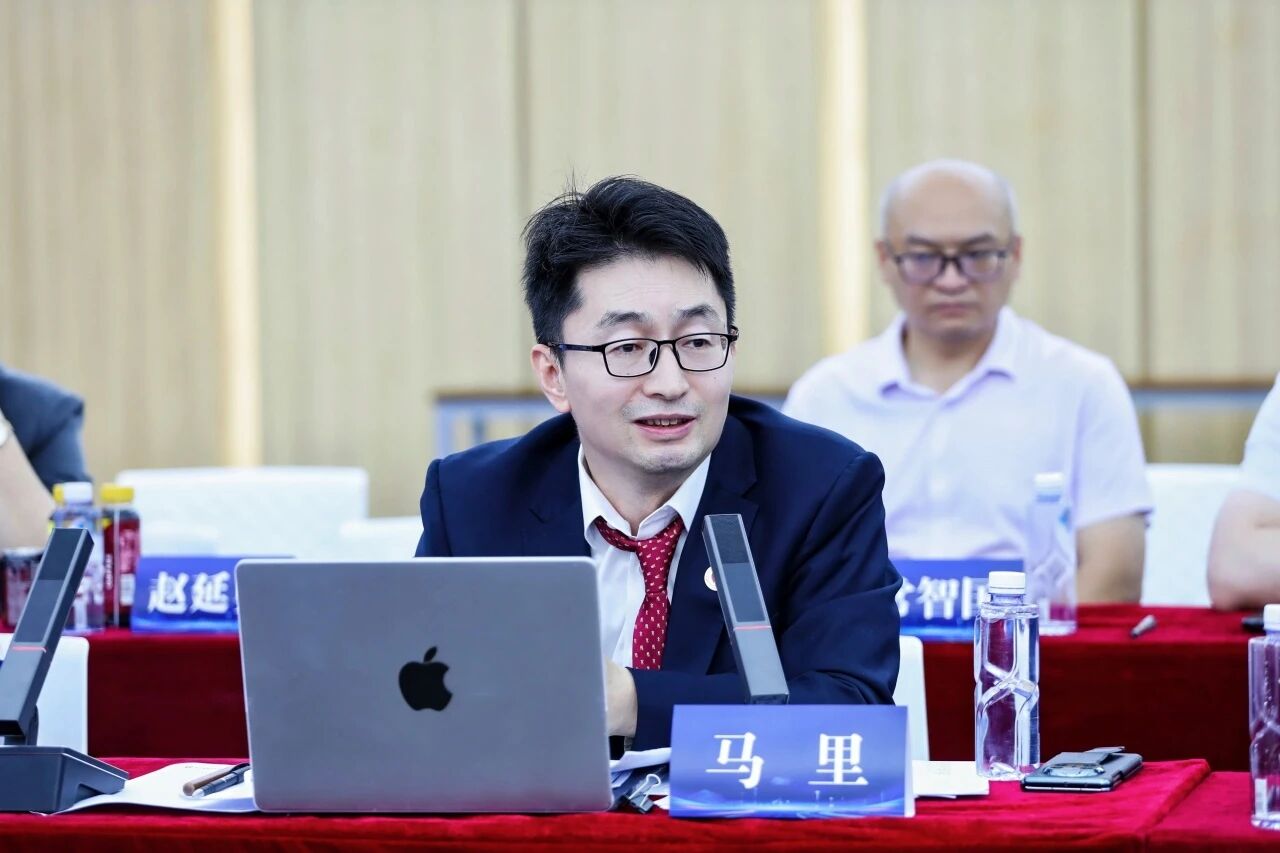
▲Mali, equity partner of Jingsh Law Firm and executive director of the Criminal Committee of Jingsh Law Firm (National)
Mali, equity partner of Jingsh Law Firm and executive director of the Criminal Committee of Jingsh Law Firm (National), spoke on the topic of "Breakthroughs of Financial Analysis Evidence in Criminal Defense". Combining his own experience in handling cases, he demonstrated the path to breakthrough in the defense of capital evidence from four dimensions: First, he broke through the allegation that "the flow of funds determines the characterization of the case." In a certain casino case, he successfully achieved non-arrest by questioning the lack of direct evidence, insufficient basis for identifying the nature of funds, and the comprehensive application of evidence adjudication principles. Second, he broke through the accusation that "the proportion of funds determines the characterization of the case." In the case of real transaction evidence, the probative power of the proportion of funds was questioned; third, the accusation of "the use of funds determines the characterization of the case" was broken. In a certain loan fraud case, the charge was successfully changed based on the relevant meeting minutes on the determination of the purpose of illegal possession; fourth, the accusation of "the source of funds determines the characterization of the case" was broken, and the logic of the accusation of the source of funds was effectively countered by collecting objective evidence, sorting out the fund links, etc. He concluded by emphasizing that in the face of financial evidence, defense lawyers must be good at questioning, using the power of electronic data experts, and finding defense breakthroughs in the financial data that are beneficial to the parties.
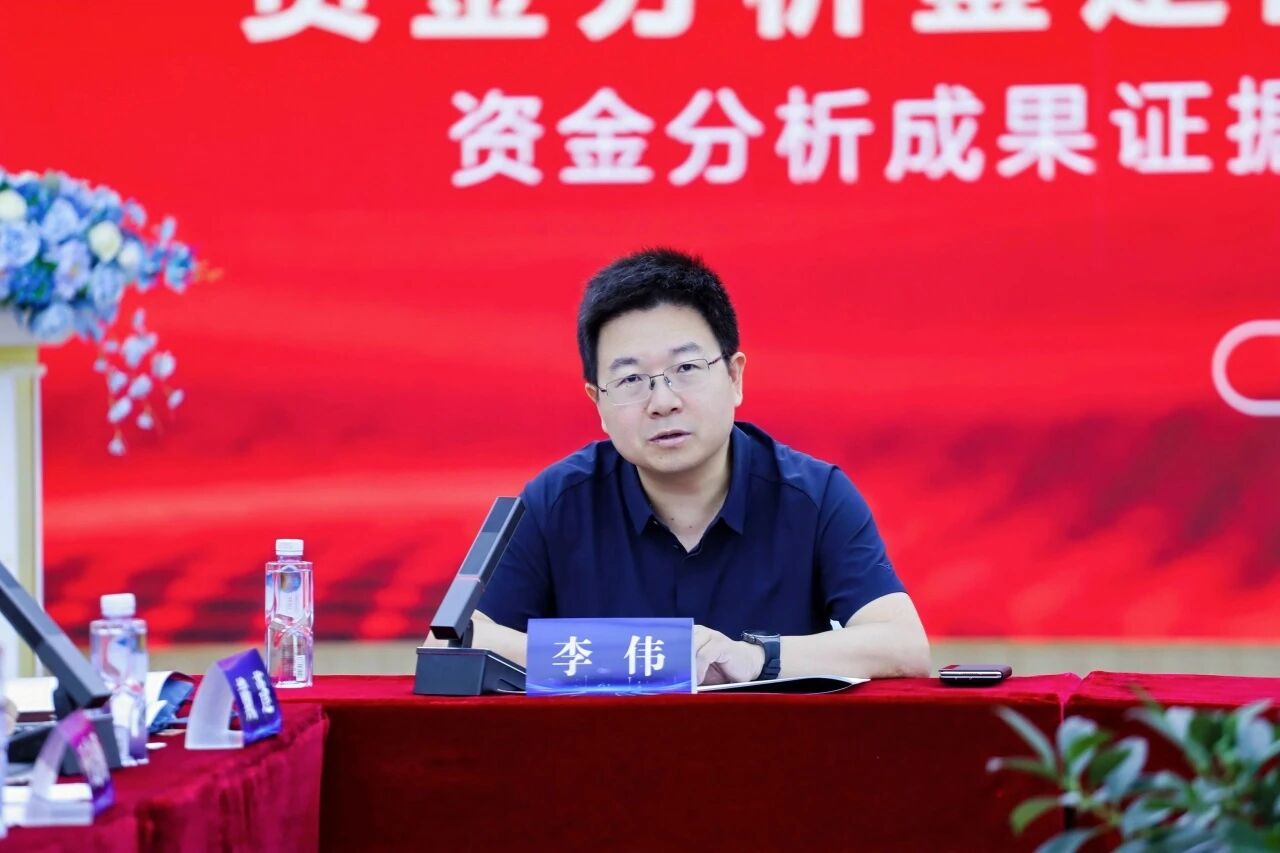
▲Li Wei, associate professor at the School of Law, Central University of Finance and Economics, Institute for Discipline Inspection and Supervision, and director of the Continuing Education Office
Li Wei, associate professor of the School of Law, the Institute of Discipline Inspection and Supervision, and director of the Continuing Education Office of the Central University of Finance and Economics, presided over the entire forum. He used the "secondary refinement" method to distinguish core topics such as the distinction between fund analysis reports and appraisal opinions, the difference in institutional logic between fund research and judgment and fund appraisal, and the path of evidence transformation. The analysis and comments, based on the experience of participating in the "Guidelines for Pre-inspection of Fund Analysis and Appraisal", put forward their own views on fund analysis and appraisal, emphasizing the value of fund analysis and appraisal to penetrate the fog of disconnected capital flows and restore the objective facts of capital flows. The pragmatic and profound insights set the tone for the orderly development, rational dialogue, and professional discussion of the entire seminar.
Meeting summary
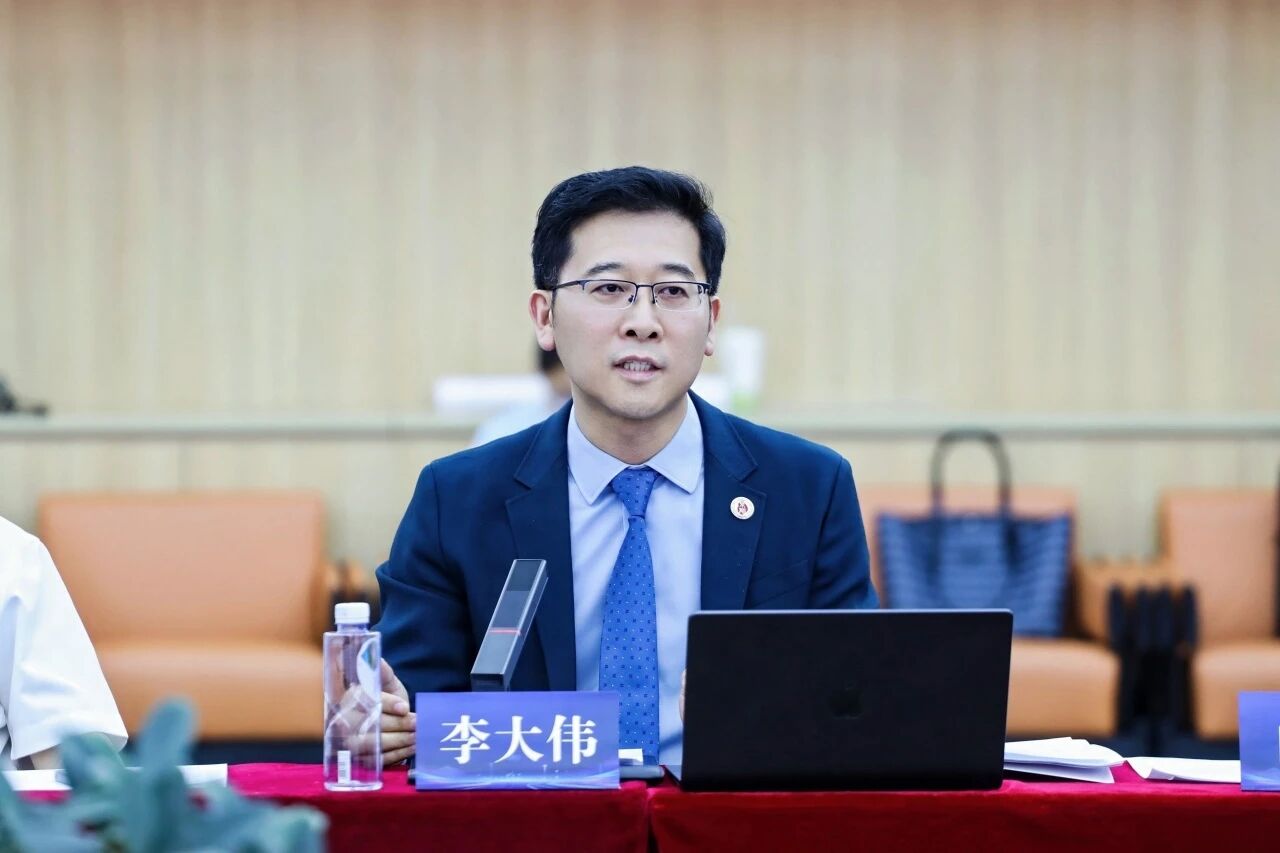
▲Li Dawei, equity partner of Jingsh Law Firm and deputy director of the Criminal Committee of Jingsh Law Firm (National)
In his concluding speech, Li Dawei, equity partner of Jingsh Law Firm and deputy director of the Criminal Committee of Jingsh Law Firm (National), believed that when faced with the new type of evidence of capital analysis and identification, lawyers should have sufficient reserves of technical knowledge of capital analysis and master the basic principles and technical standards of capital analysis and identification. Based on his own experience in public security work and defense experience, he proposed that in order to make a difference in the cross-examination and review of fund analysis and identification, he must first understand and understand it and understand its operating principles. He said that this seminar was of great significance. Through the collision and professional exchanges between the practical, theoretical and legal circles, it provided a substantive response to the intersection of technology and law that lawyers are concerned about. First, fund analysis and identification are aimed at solving “specialized problems.” The essence of "financial analysis as evidence" is to use the results of financial data analysis as evidence to prove the facts of economic cases. Only when the capital data analysis solves "specialized issues" involving funds in economic cases and is conducted by an appraiser with capital analysis and appraisal qualifications in accordance with the rules and procedures for fund analysis and appraisal, the results can be used as appraisal opinions. Second, the fund analysis and appraisal materials must match the fund analysis and appraisal matters to maintain the correlation between the two. Especially when reviewing appraisal opinions, it is necessary to determine whether the appraisal materials match the appraisal matters. If the materials do not match, thirdly, the capital analysis appraisal needs to clarify the boundary with the forensic accounting appraisal and audit report, and make up for its shortcomings with the forensic accounting appraisal and audit report, in order to give full play to its evidentiary advantage as evidence. In the future, Jingsh Law Firm will continue to strengthen cooperation with the School of Law of the Central University of Finance and Economics, and actively carry out a series of special research and host forums on topics such as financial securities crimes, capital analysis, forensic accounting appraisals, and audit reports. We look forward to the continued support of experts and colleagues from all parties, learning from each other during exchanges, and working together.
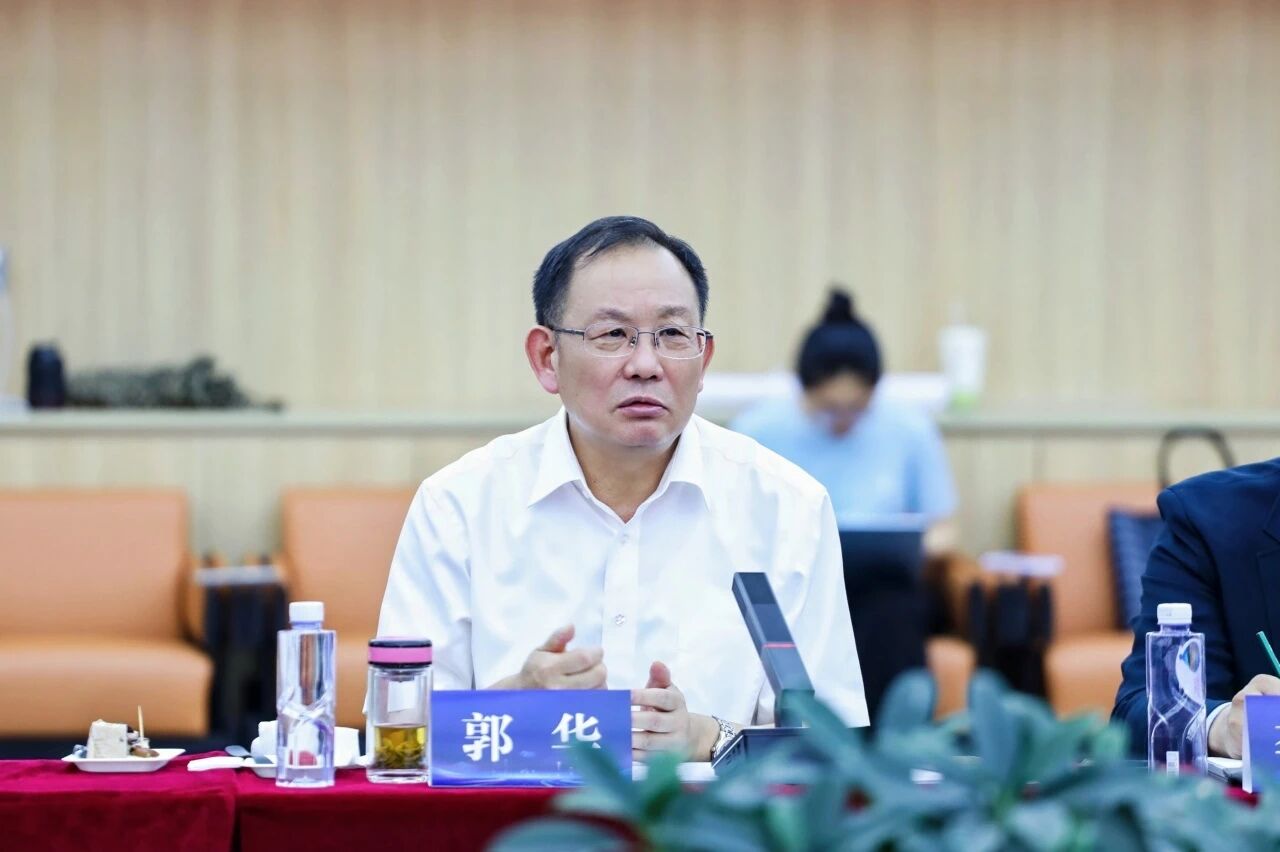
▲Guo Hua, professor and doctoral supervisor at the School of Law and the Institute of Discipline Inspection and Supervision of the Central University of Finance and Economics
Guo Hua, professor and doctoral supervisor at the School of Law and the Institute of Discipline Inspection and Supervision of the Central University of Finance and Economics, pointed out in his concluding speech that the theoretical, practical and legal circles of this seminar conducted systematic and in-depth discussions on the specialized issues of fund analysis and identification from multiple perspectives. He made three conclusions: First, fund analysis is an inevitable product of the historical development of appraisal, an inevitable result derived from the era of big data and digital intelligence, and an inevitable result of the development of interdisciplinary fields to make up for the shortcomings of traditional appraisal. The intersection of disciplinary boundaries has given rise to the appraisal project of this new type of specialized issue. Second, the current doubts about the fund analysis report are all directed at the early "fund data analysis and judgment report" rather than the fund analysis and appraisal system currently being established. The new system cannot be judged by old problems, and criticism should be targeted. Third, the evidence system, especially the appraisal system, must be future-oriented and absorb new appraisal technologies. If it does not adapt to the development of the modern judicial system and the needs of judicial practice, it will be inevitable to be eliminated by practice. He emphasized that the advancement of the fund analysis and identification system requires the joint efforts of the legislative, judicial and academic institutions, and looked forward to continued attention and rational suggestions from all parties to jointly promote the standardized development of this new evidence system. By bringing together the wisdom of all parties, this seminar provided solid theoretical support for the improvement of the system and practical development of capital analysis and appraisal, and also established an important communication platform to promote "financial analysis as evidence" from system construction to practical implementation. Experts and scholars attending the meeting agreed that with the continuous improvement of the rules for fund analysis and identification and the gradual improvement of the review and judgment rules, the results of fund analysis will play an increasingly important role in the judicial proof of economic crime cases, contributing theoretical wisdom and practical experience to the improvement of the socialist evidence system with Chinese characteristics. In the future, Jingshi Law Firm will continue to take advantage of its professional platform, continue to pay attention to the theoretical development and judicial practice in the field of capital analysis and appraisal, deepen collaboration with universities and practical departments, and contribute to the standardized construction of this new evidence system.